The Needles to Moab tour is one of the best-kept secrets in Moab mountain biking — offering White Rim-caliber scenery, high-quality trails, and significantly fewer crowds over a 4-day point-to-point ride from the Needles district of Canyonlands back to Moab. If you have already done the White Rim and want something equally spectacular, or if White Rim permits are sold out, this is the ride you are looking for.
White Rim-Quality Views Without the Crowds
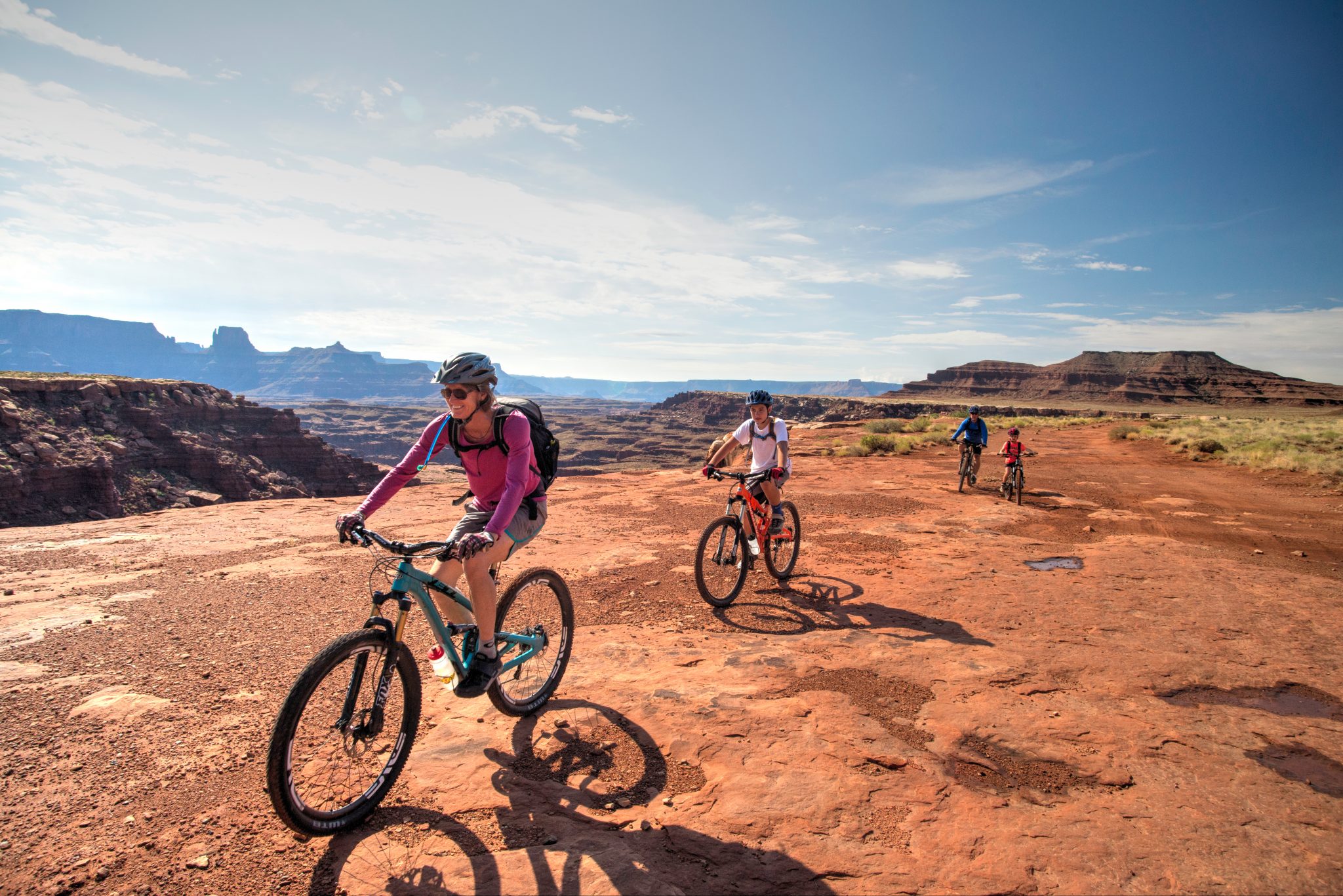
The White Rim is deservedly famous, but its popularity means you are rarely alone out there, especially on busy weekends. The Needles to Moab route runs on trails that parallel sections of the White Rim but on the opposite side of the Colorado River, outside the national park boundaries. The result is similar sweeping canyon views with a fraction of the traffic.
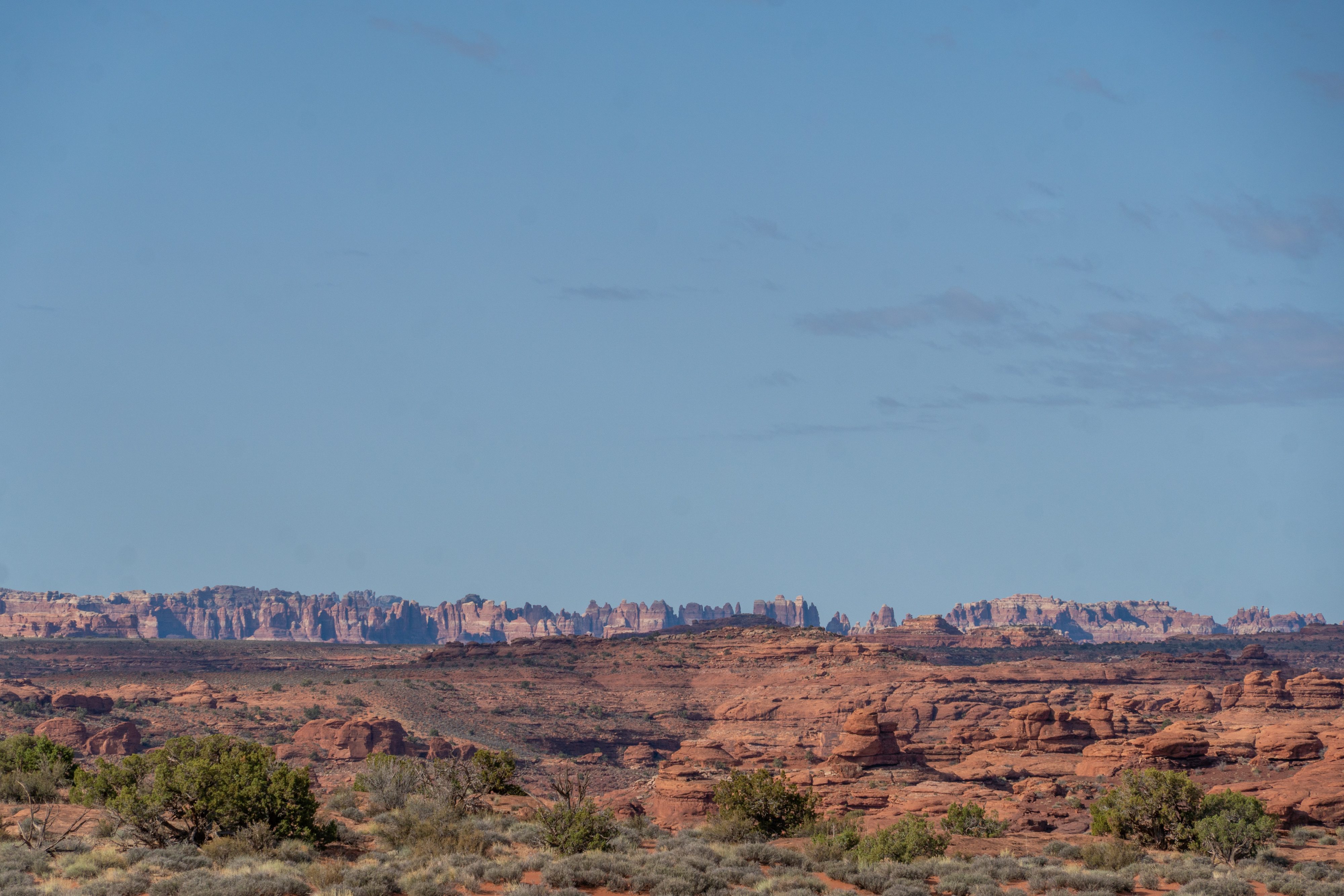
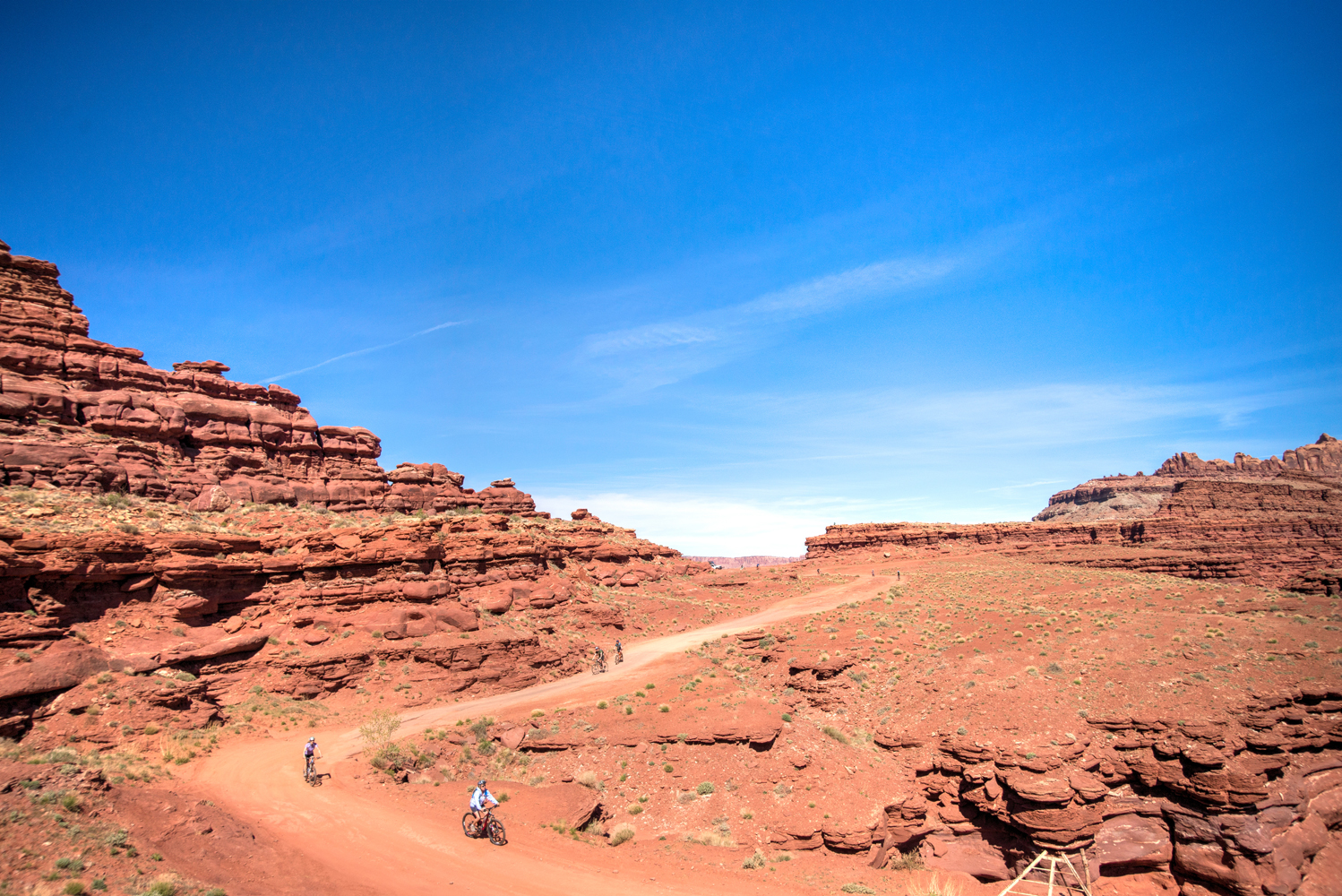
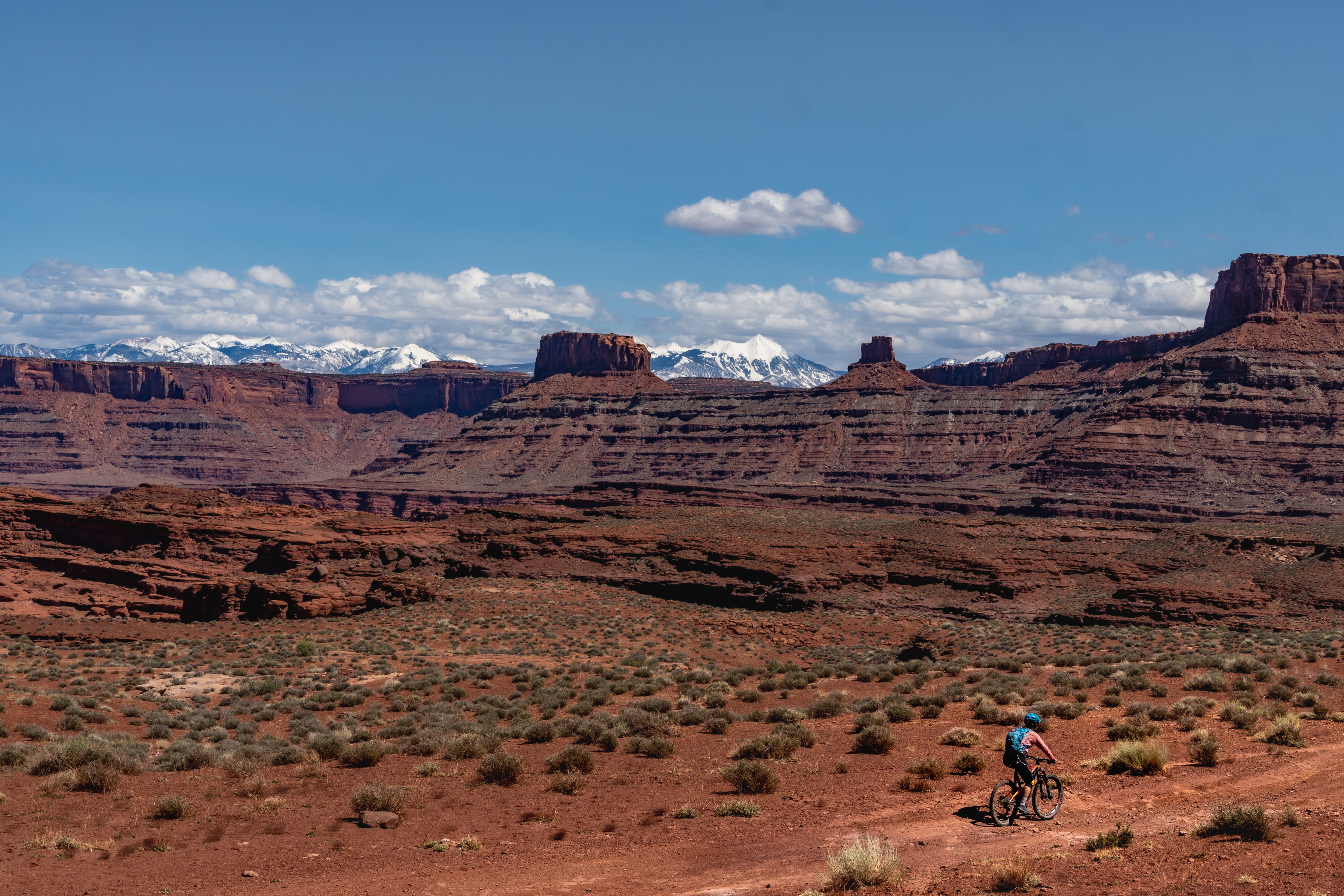
The ride starts near the Needles district of Canyonlands, which itself is one of the most visually dramatic areas in southern Utah. The iconic needle-like rock spires that give the area its name are visible from multiple points along the route. As you traverse westward toward Moab, the landscape shifts through layered sandstone benches, deep side canyons, and expansive mesa tops with views that rival anything on the White Rim.
The key difference: on the White Rim, you might share a campsite with another group or see a dozen vehicles on a busy day. On the Needles to Moab route, it is common to go hours without seeing another person.
What the Route Looks Like
The 4-day Needles to Moab tour covers a mix of terrain:
- Day 1: Start near the Needles area and ride into the backcountry on jeep roads and singletrack, with views into the Needles formations
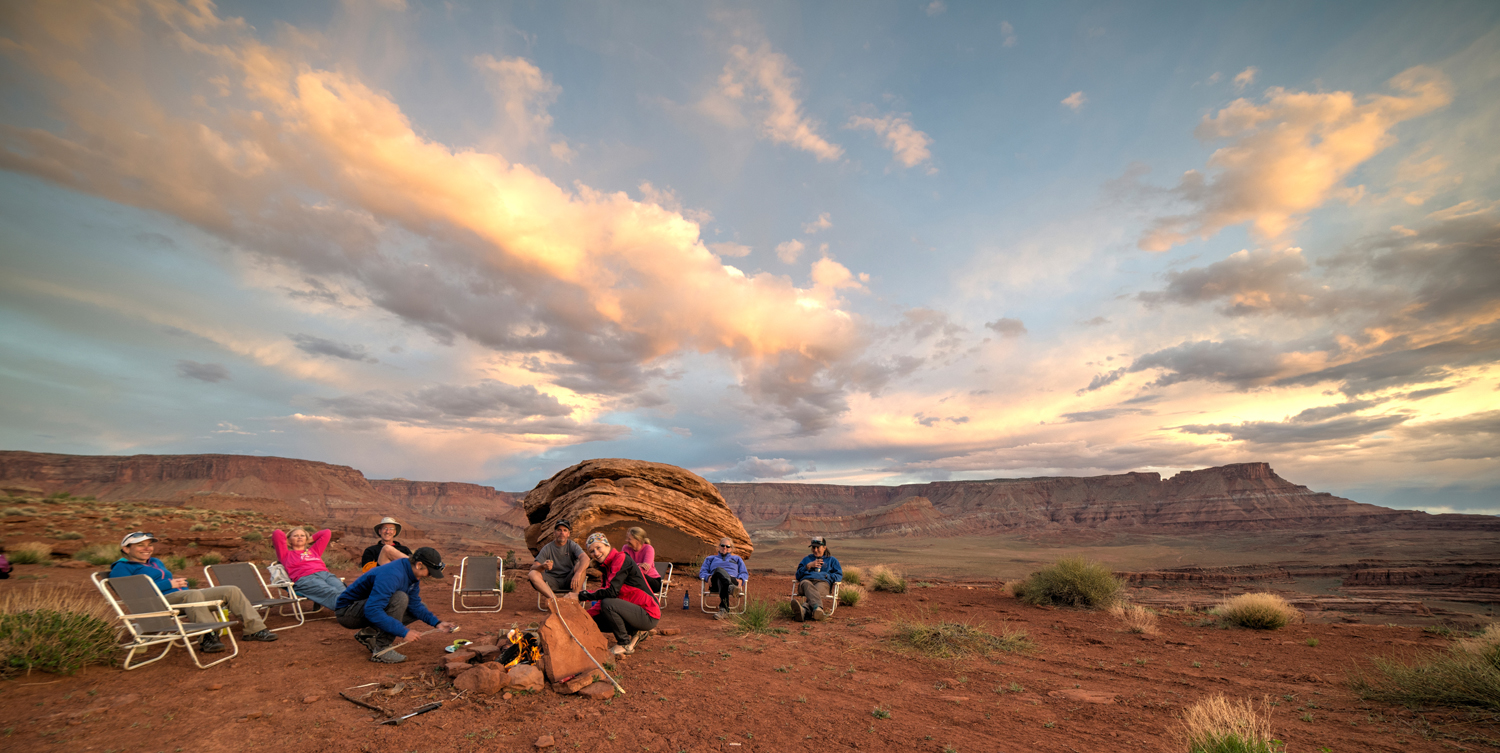
- Day 2-3: Traverse along the canyon rim, with camp spots offering panoramic sunset views across the red rock landscape
- Day 4: Finish the ride back into Moab, arriving in town rather than at a remote trailhead
One unique advantage of this route is the finish. Unlike the White Rim (which ends at the same place it starts, requiring a long drive back to Moab), the Needles to Moab ride literally drops you back in town. There is something deeply satisfying about riding your bike into Moab after four days in the backcountry.
Perfect for Regular or E-Bikes
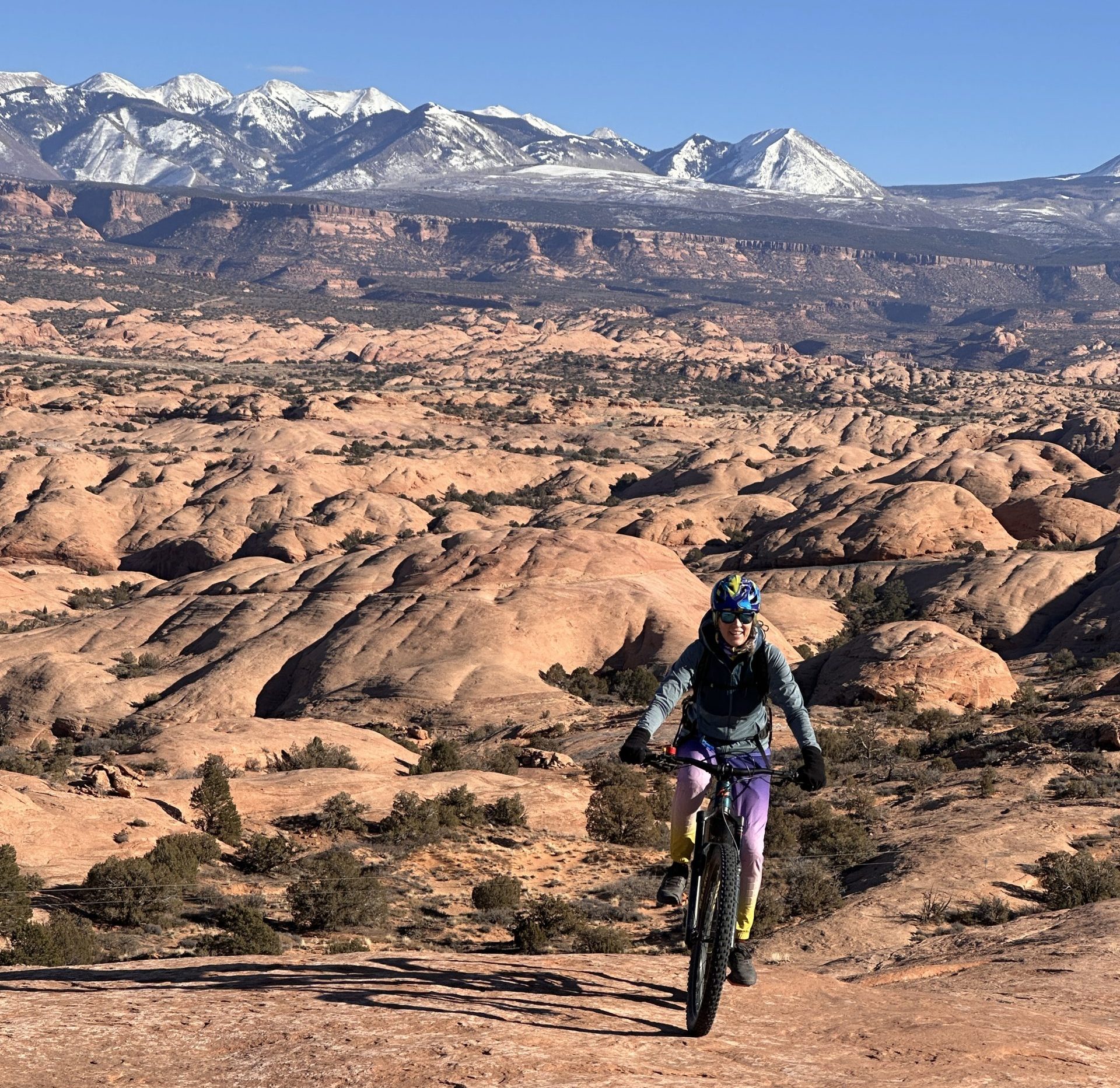
The Needles to Moab route accommodates both traditional mountain bikes and e-bikes on the same tour. The terrain is well-suited to either option:
- Regular bikes: The route is achievable for intermediate riders with reasonable fitness. The daily distances are manageable, and the terrain is not overly technical.
- E-bikes: Charging is available at camp, so you can ride with pedal assist throughout the tour. This makes the route accessible to riders who want the multi-day backcountry experience without the endurance demands.
Having both bike types on the same tour works well because the e-bike riders can keep pace with stronger riders on regular bikes, and everyone can focus on the scenery rather than grinding through difficult sections.
A Perfect Next Step After the White Rim
If you have already completed the White Rim and loved it, the Needles to Moab ride offers:
- Different terrain: While the White Rim follows a relatively uniform bench around the canyon, the Needles route crosses multiple terrain types and elevation changes
- Different views: The Needles formations, the opposite side of the Colorado River gorge, and views back toward the White Rim from a completely different perspective
- Different feel: The route feels more remote and exploratory than the well-traveled White Rim road
Many of our repeat guests do the White Rim one year and the Needles to Moab the next, and consistently report that both rides are equally spectacular in different ways.
The Guided Experience
On our Needles to Moab tour, everything is handled for you:
- Backcountry gourmet meals prepared by your guides at camp
- All camping equipment provided and set up for you
- Route-finding and mechanical support from experienced guides who know every inch of the trail
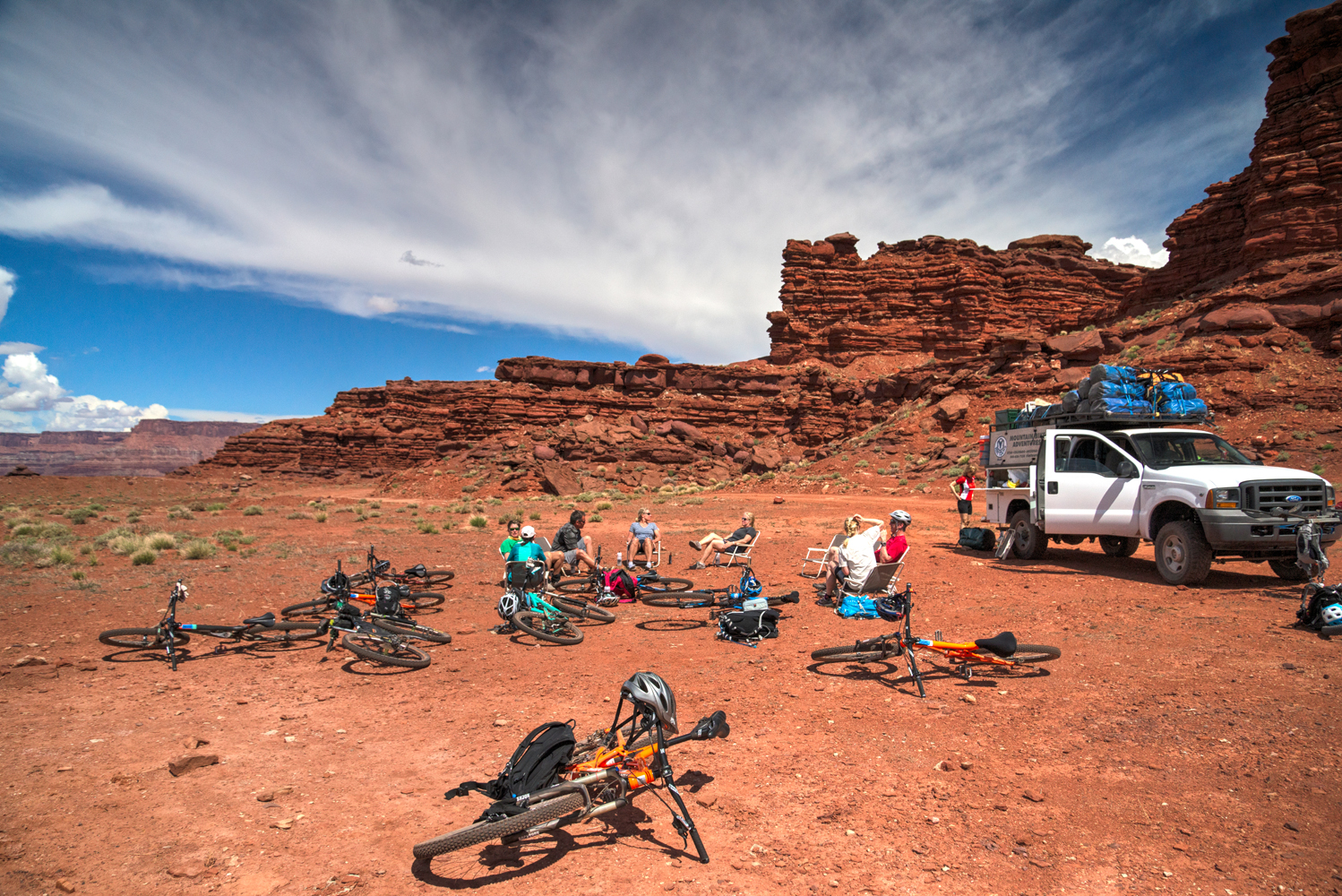
- Vehicle support for gear transport between camps
- Wilderness First Responder-certified guides for safety in remote terrain
The multi-day camping format is what makes this ride special. Sitting around a campfire with your group, watching the sunset paint the canyon walls orange and red, eating a meal that has no business being this good in the backcountry — this is the experience that makes people come back to Rim Tours year after year.
When to Ride
The best seasons for the Needles to Moab route are:
- Spring (March-May): Comfortable temperatures, wildflowers, excellent trail conditions
- Fall (September-November): Cool mornings, warm afternoons, stunning light
Summer is too hot for a multi-day ride at these elevations. Winter is possible but unpredictable.
Frequently Asked Questions
How does the Needles to Moab ride compare to the White Rim in difficulty?
The two rides are similar in overall difficulty — both are achievable for intermediate riders with reasonable fitness. The Needles route has slightly more varied terrain and elevation change, but daily distances are comparable. Neither requires advanced technical skills.
Do I need my own bike for the Needles to Moab tour?
No. Rim Tours provides high-quality mountain bikes and e-bikes on all multi-day tours. If you prefer to ride your own bike, you are welcome to bring it.
How many people are typically on a Needles to Moab tour?
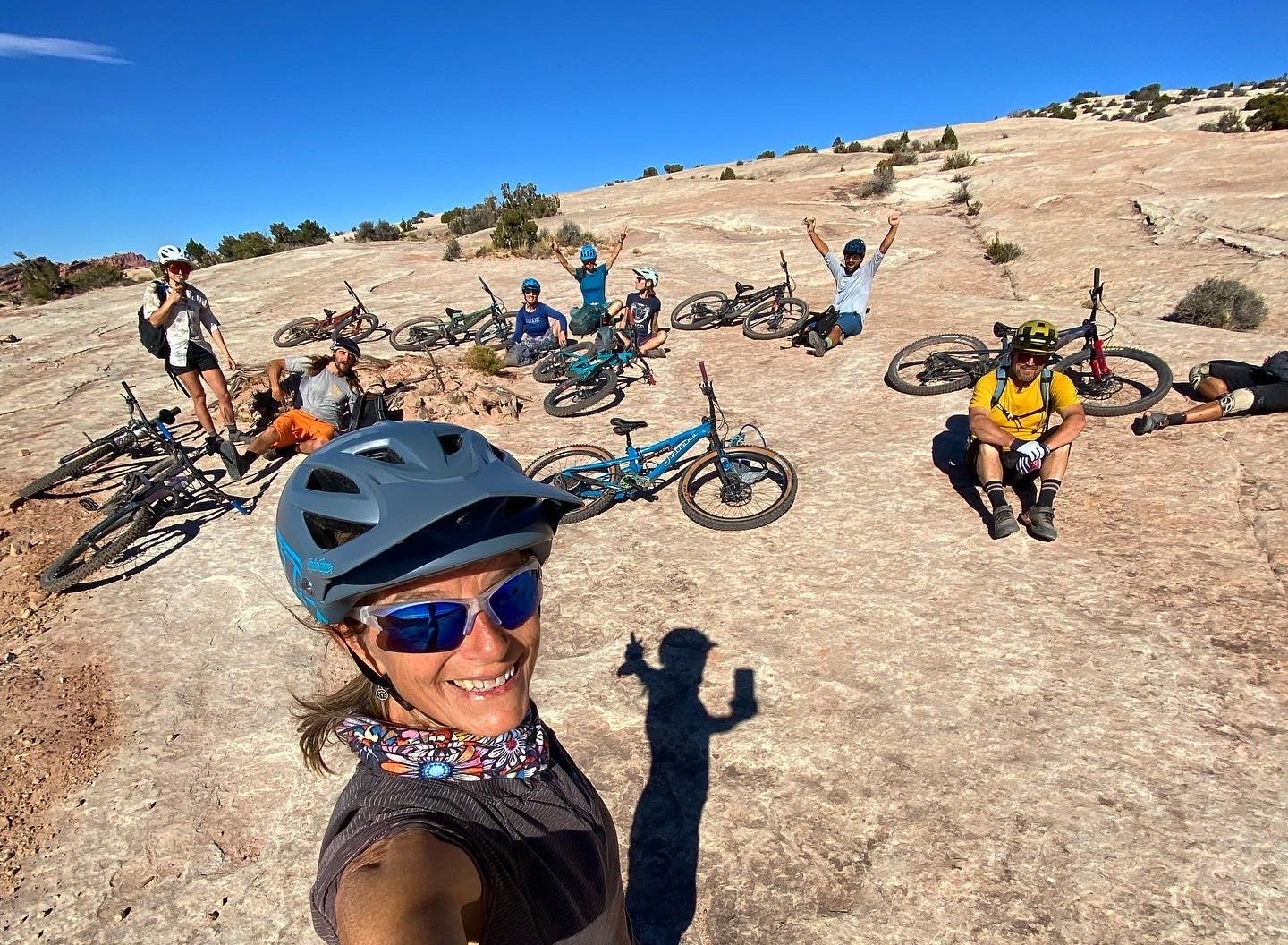
Groups are small — typically 4-8 guests plus 2-3 guides. The small group size ensures personal attention and a more intimate backcountry experience.
Is the Needles to Moab ride suitable for someone who has never done a multi-day bike tour?
Yes. The daily distances are manageable, the guides handle all logistics and camping, and the terrain is not overly technical. If you can ride a bike for 3-4 hours at a moderate pace, you can do this tour. The e-bike option makes it even more accessible.
Why is the Needles to Moab route less well-known than the White Rim?
The White Rim benefits from being inside Canyonlands National Park, which gives it automatic name recognition. The Needles to Moab route runs primarily on BLM land outside the park, which means less marketing exposure. But among experienced Moab riders and guides, it is considered equally spectacular — and the lack of crowds is a significant advantage.