
Tips for Mountain Biking in Winter Moab

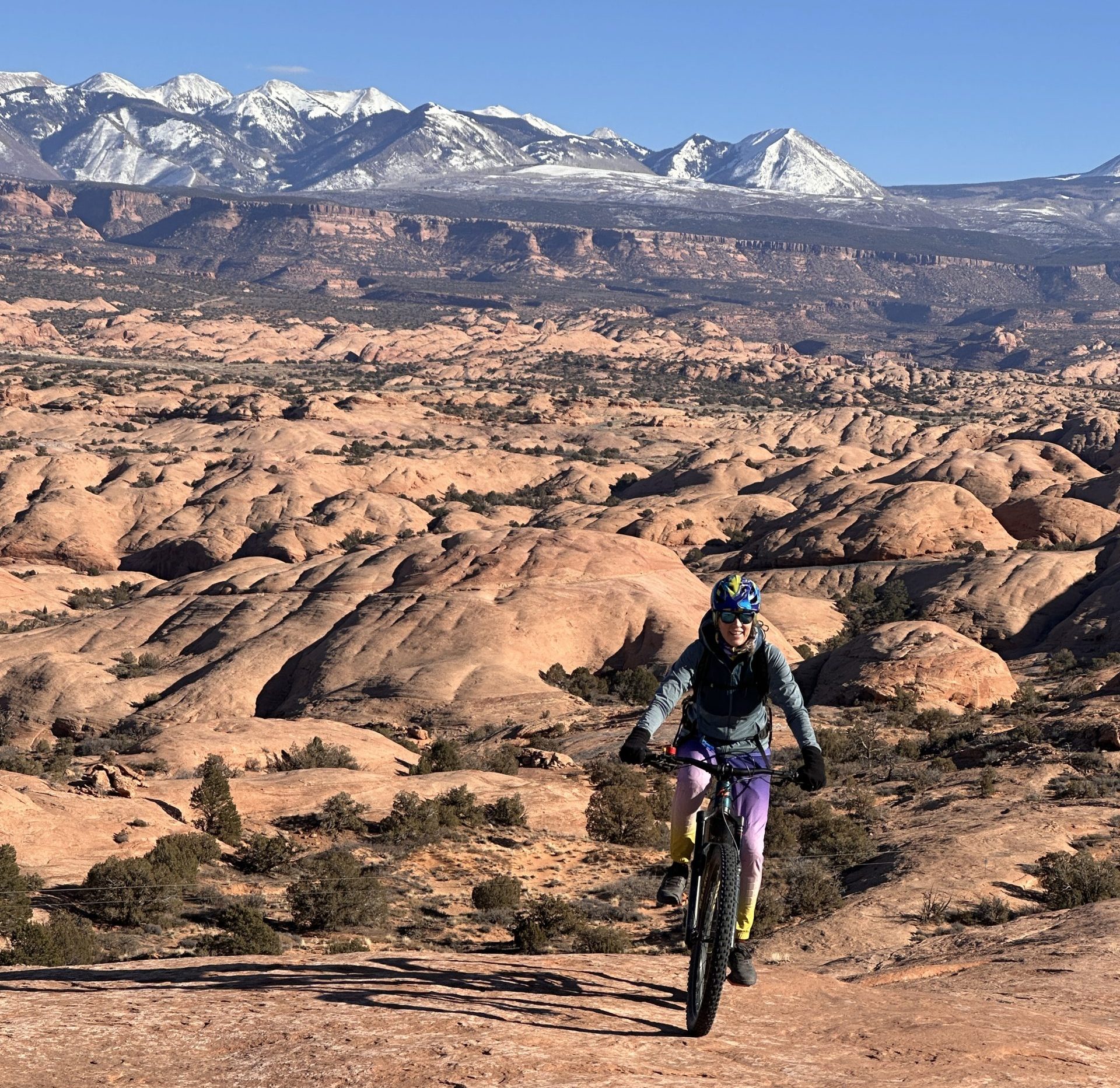
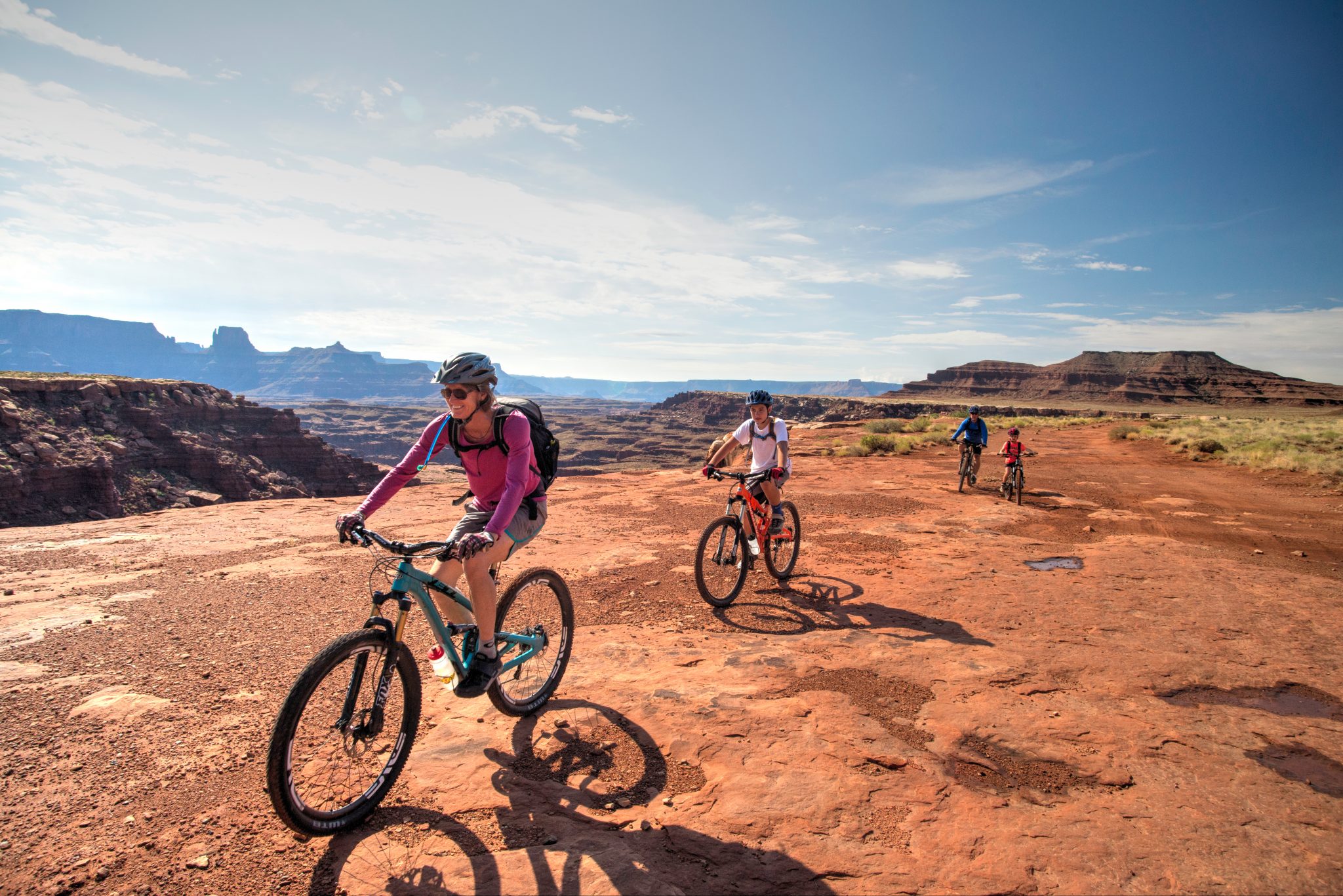
Winter mountain biking in Moab is absolutely possible — and often spectacular — when trail conditions permit. Mid-day highs frequently climb into the 40s or higher, the trails are empty, and the low-angle winter light makes the red rock glow like nothing else. The key is preparation: proper layering, hydration awareness, and flexibility to adapt to conditions that can change quickly in the desert.

Winter Conditions in Moab: What to Expect

Moab’s winter is unpredictable. Some years see snow that sticks around for weeks. Other winters are almost entirely dry, with rideable conditions through December, January, and February. Here is what the numbers look like:

  • Overnight lows: Typically in the teens to low 20s (F)
  • Midday highs: Often reach 40-55 degrees on sunny days
  • Snow: Variable — some winters see a foot or more, others have nearly zero accumulation
  • Trail impact: Snow cover makes trails unusable and riding on wet soil damages trails. Always check conditions before heading out.

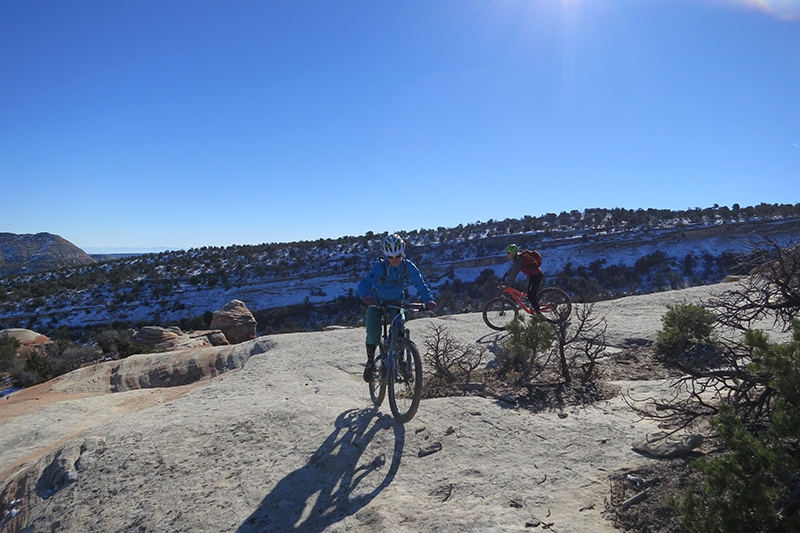
The biggest factor determining whether you can ride is snow cover. When trails are dry, winter riding in Moab is wonderful. When there is snow on the ground, you need to wait for it to melt completely before riding, as wet desert soil is extremely vulnerable to damage.

Protecting Your Extremities

Cold extremities end rides early. Here is how our guides handle it after decades of winter riding in the desert:

Hands

Bring at least two pairs of gloves. If one pair gets soaked with sweat on a climb, switch to the dry pair for the descent. Your hands are the most vulnerable to wind chill, especially on fast downhill sections. Consider lightweight liner gloves under a windproof outer glove.

Your helmet is designed for ventilation — great in summer, terrible in winter. Buy a thin-fabric skull cap that fits under your helmet. Most standard beanies are too bulky. On super cold or windy days, add a balaclava for face protection. The key is something thin enough to fit comfortably under the helmet without shifting.

Feet

Pro tip: After putting on your socks, wrap a thin layer of plastic wrap (or even the corner of a plastic shopping bag) over your toes before putting on your mountain bike shoes. This simple layer of wind resistance makes a dramatic difference in keeping your toes warm. It costs nothing and works better than most expensive solutions.

Upper Body: The Layering System

The challenge of winter riding is managing the temperature swing between climbing (when you generate heat) and descending (when wind chill drops your perceived temperature dramatically). The layering system solves this:

  1. Base layer: Thin, moisture-wicking long sleeve (merino wool is excellent — it manages moisture and does not smell)
  2. Mid layer: Quarter-zip poly fleece pullover for insulation
  3. Outer layer: Windproof soft shell jacket with some insulation

The quarter-zip mid layer is key because you can vent heat on climbs without removing a layer. Avoid cotton at all costs — once cotton gets damp from sweat, it stays cold and wet against your skin.

Lower Body

  • Knickers with knee socks are an excellent cold-weather choice that balances warmth and mobility
  • Full-length tights for colder days with wind
  • Leg warmers offer flexibility — easy to push down or remove mid-ride as temperatures change

Ride Strategy for Cold Weather

Start Uphill

Plan your route to put the major climbing at the beginning. This builds up body heat before you hit the descents where wind chill becomes a factor. Starting with a descent on a cold morning is a recipe for frozen extremities.

Drink Water Even When You Are Not Thirsty

The desert air is just as dry in winter as in summer. Cold air does not trigger the thirst response the way heat does, so you need to consciously remind yourself to drink. If temperatures are below freezing, hydration tube hoses can ice up — consider using an insulated water bottle inside your backpack instead.

Know Your Limits

Cold saps your energy faster than you expect. Plan shorter rides than you would in prime season, and leave a margin for the unexpected. Also watch for ice on north-facing slopes that do not get direct sunlight — even when the rest of the trail is dry and clear, shaded sections can have invisible ice.

Best Winter Trails in Moab

When conditions are dry, lower-elevation trails are the best options for winter riding:

  • Courthouse Loop — South-facing aspects warm up quickly
  • Bar M and Klondike Bluffs — Lower elevation, often dry when higher trails are not
  • Lazy, EZ, and the Moab Brand trails — Close to town with good sun exposure
  • Slickrock Trail — The dark sandstone absorbs heat and dries quickly after snow

Avoid higher-elevation trails like the Whole Enchilada segments and anything in the La Sal Mountains, which will be under snow from November through at least May.

Warm-Weather Alternatives

If cold-weather riding is not your thing, Rim Tours also operates in warmer locations during the winter months. Our Arizona tours offer sunshine and rideable temperatures when Moab is locked in winter. It is a great way to keep riding through the off-season without the cold-weather gear requirements.

Frequently Asked Questions

Can you mountain bike in Moab in December and January?

Yes, on dry days with no snow cover. Check trail conditions before you go — when trails are wet or snow-covered, riding damages the soil and is not enjoyable. Call ahead to local bike shops or check trail condition reports online.

What temperature is too cold for mountain biking in Moab?

There is no hard cutoff, but most riders find that if morning temperatures are below 20 degrees, it is worth waiting until midday when things warm up. By 11 AM on a sunny winter day, temperatures often reach the 40s, which is comfortable with proper layering.

Are bike shops open in Moab during winter?

Some shops maintain limited winter hours, but not all. Call ahead before assuming a shop will be open. During the peak winter months (December-January), Moab is very quiet and some businesses reduce operations.

Should I bring my own bike or rent for winter riding in Moab?

If you are committed to winter riding, bringing your own bike is usually the better option since rental availability is limited in the off-season. If you prefer to rent, call shops well in advance to confirm availability and hours.

← Back to all posts