The Slickrock Trail is hard. It is an 11-mile loop over undulating Navajo sandstone fins on the outskirts of Moab, Utah, rated as an advanced ride that demands solid fitness, confident bike handling, and comfort with exposure. It is not a trail where you can โfigure it out as you goโ โ riders who underestimate it frequently end up exhausted, dehydrated, or injured. That said, for those with the right preparation, it remains one of the most unique and rewarding mountain bike experiences on the planet.
We have been guiding riders on Slickrock since the late 1980s. Here is an honest assessment of what you are getting into.
What Makes Slickrock Special
The Slickrock Trail is unlike any other mountain bike ride in the world. Here is why it has drawn riders from across the globe for decades:
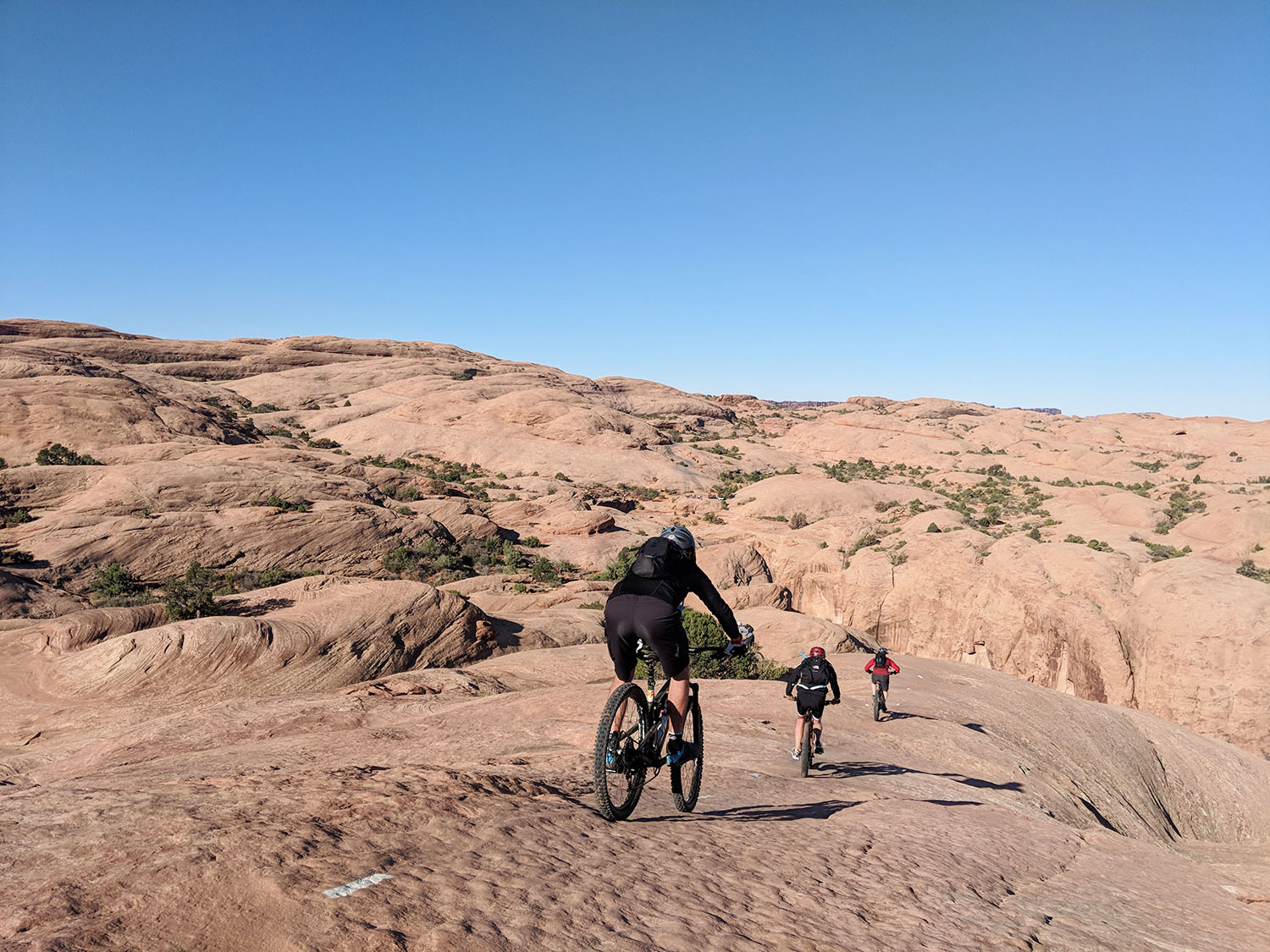
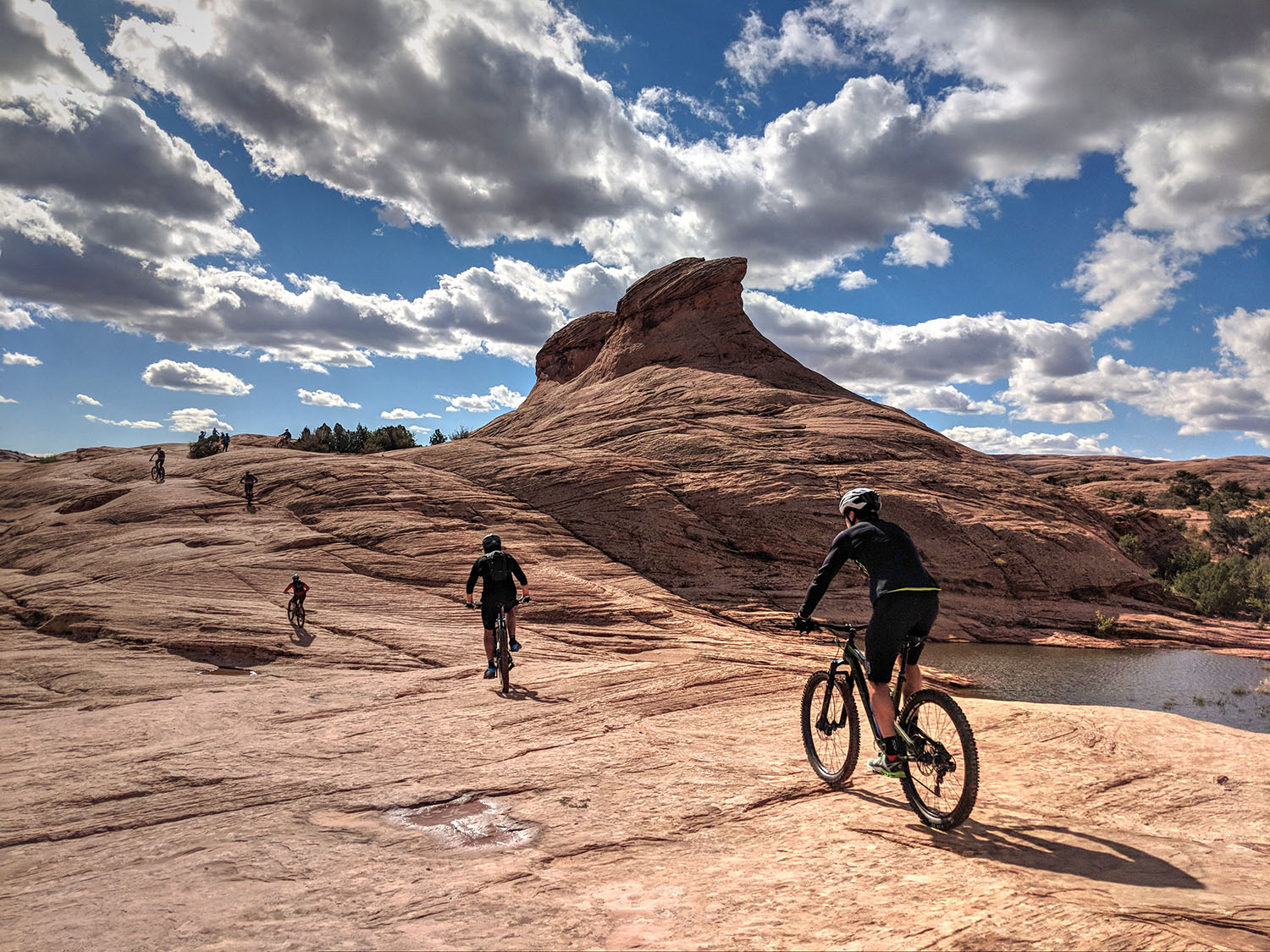
The surface itself. Despite the name, slickrock is not slick. Navajo sandstone has a coarse, grippy texture that provides extraordinary traction โ more than any dirt trail you have ridden. This traction allows you to ride up and across slopes that would be impossible on normal terrain. Your tires stick to the rock in ways that feel almost unnatural until you learn to trust it.
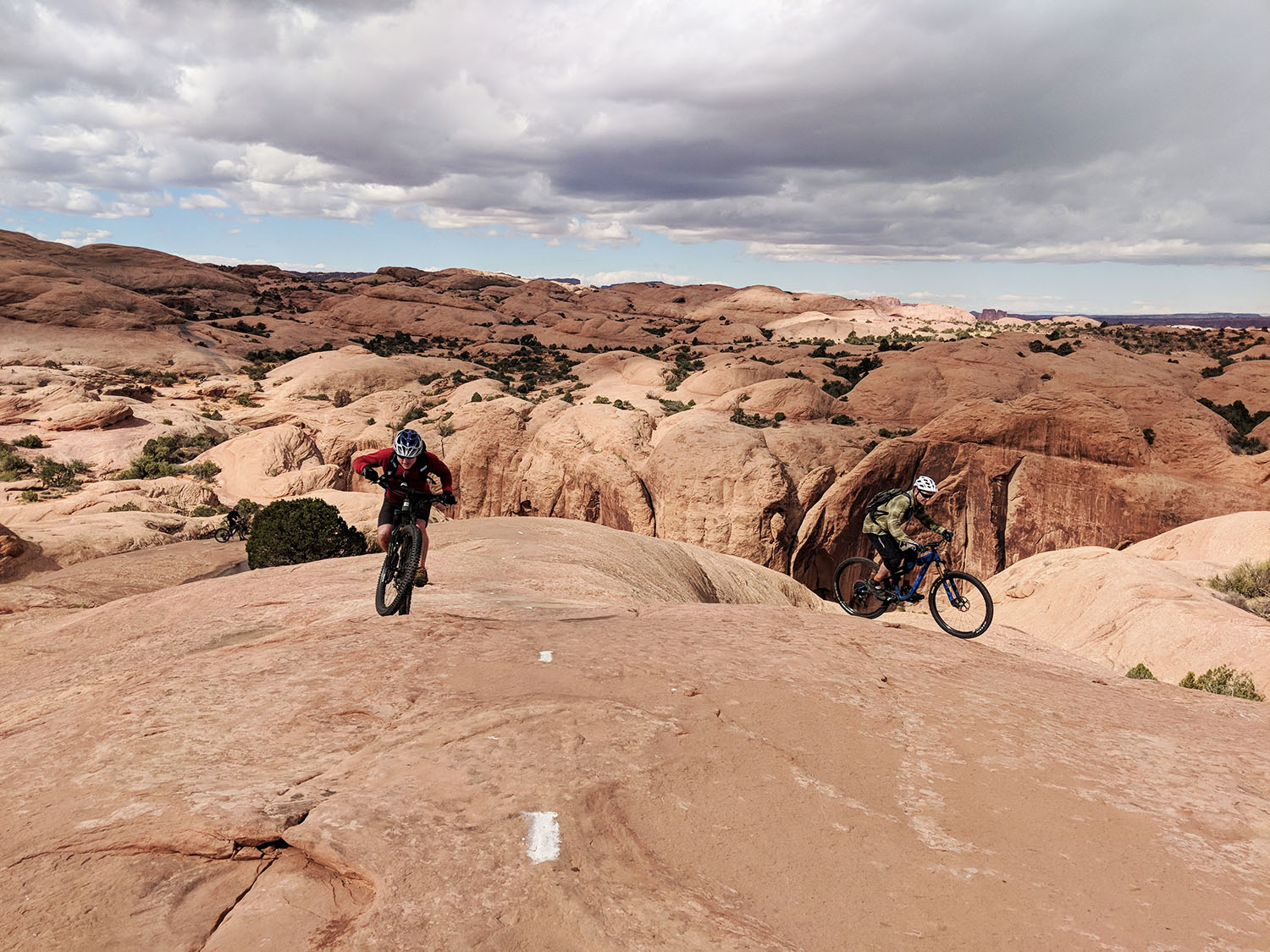
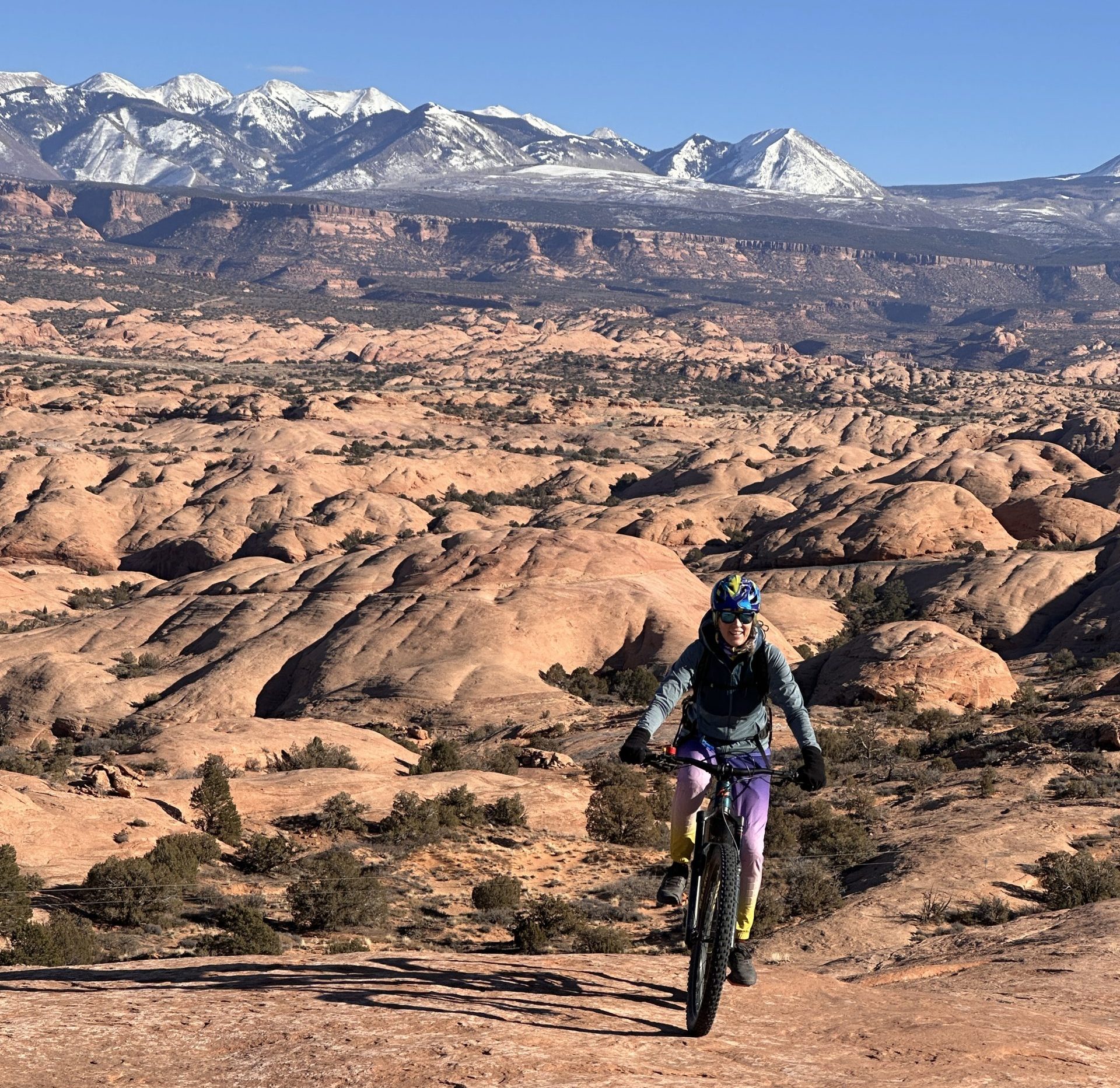
The terrain. The trail rollercoasters over a landscape of petrified sand dunes โ rounded sandstone fins that rise and fall in every direction. There are no flat sections. You are constantly climbing a steep pitch, cresting it, and immediately descending the other side. The effect is like riding ocean swells frozen in stone.
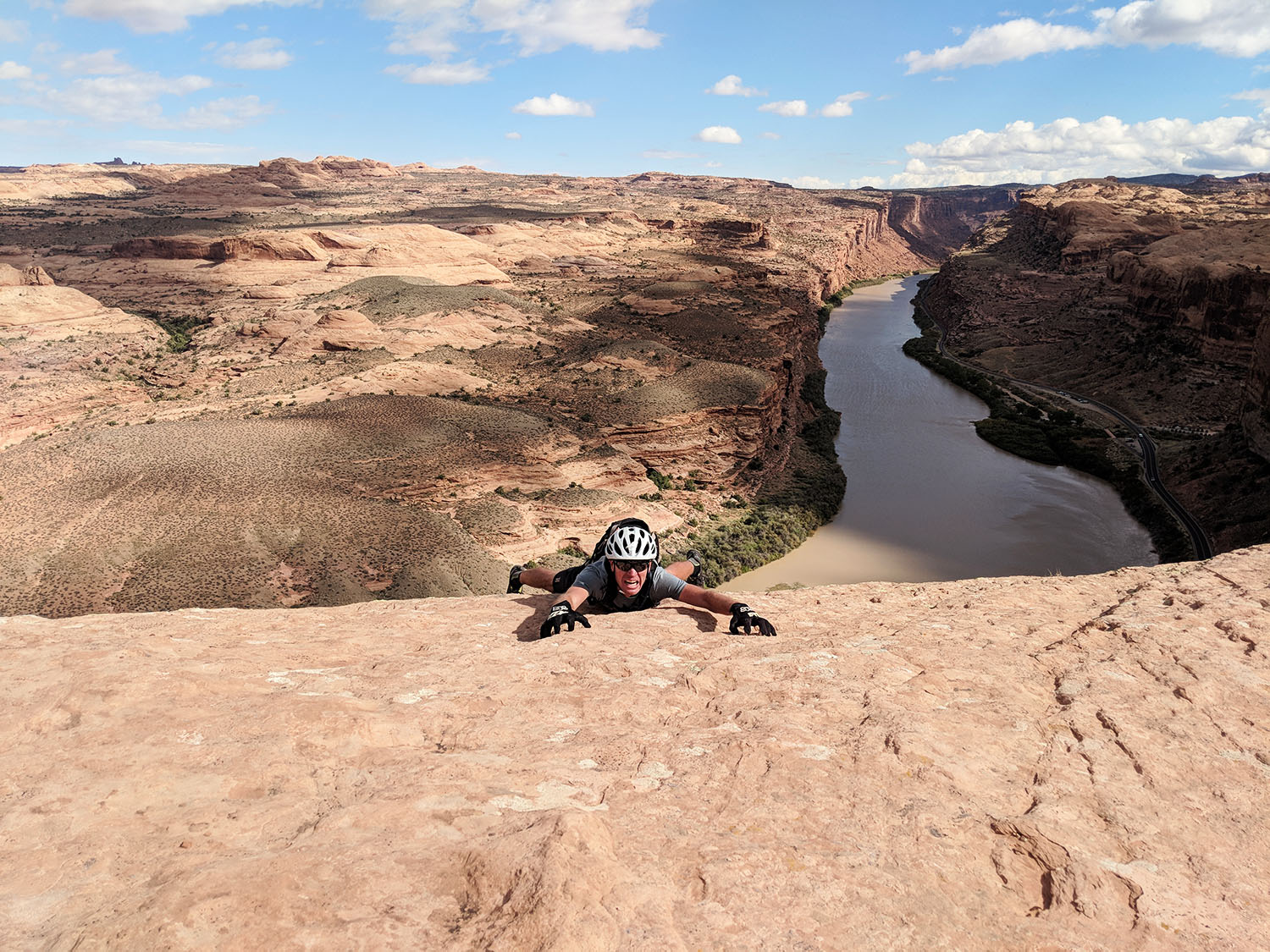
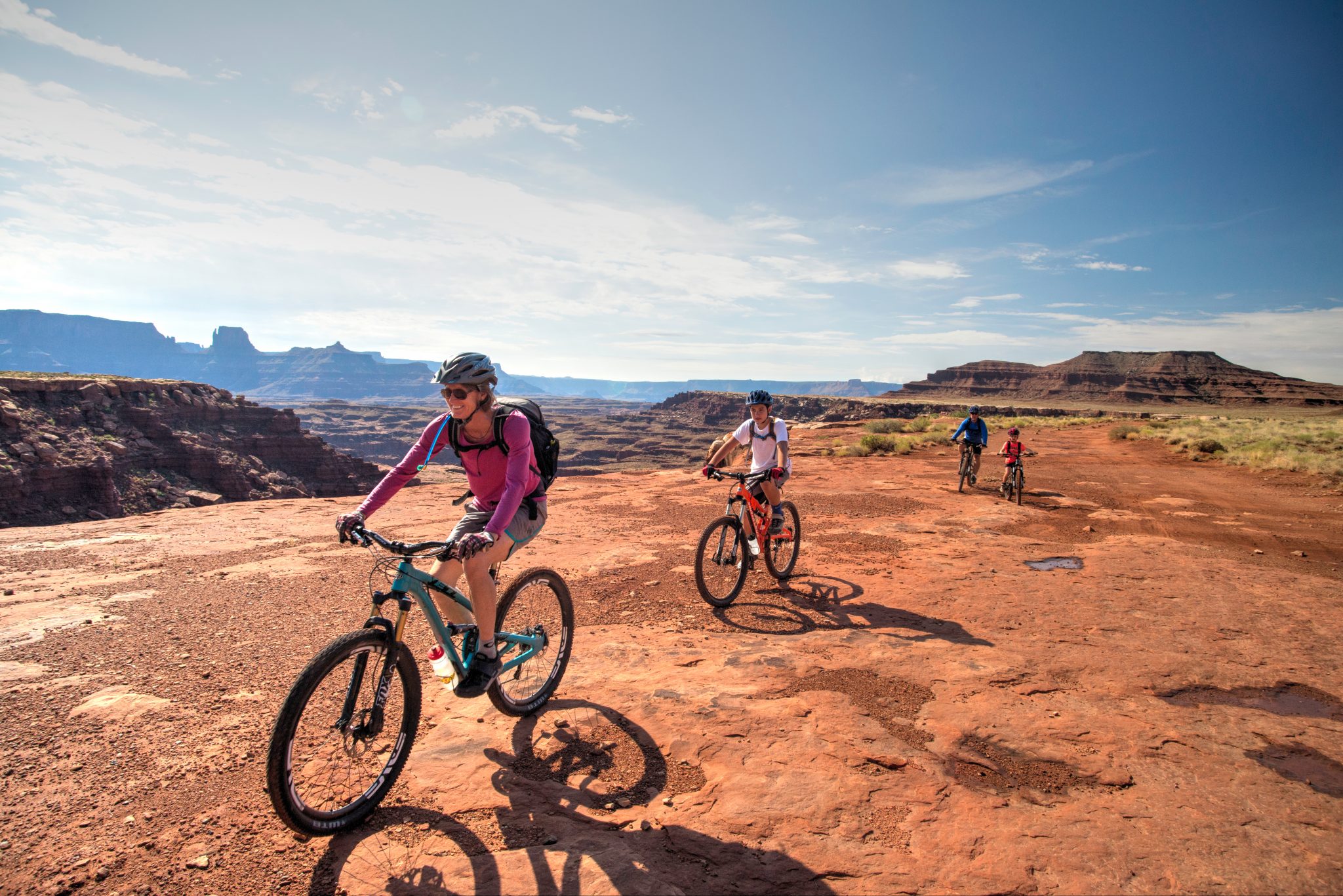
The scenery. The trail sits on a broad sandstone bench above the Colorado River, with views across to the La Sal Mountains and down into the canyon. The rock itself shifts color through the day โ pale gold in morning light, deep orange at midday, purple at dusk.
The history. The trail was originally marked in the 1960s for Honda 90 Trail motorcycles. Mountain bikers discovered it in the mid-1970s, and it quickly became the most famous mountain bike trail in the world, landing on magazine covers and putting Moab on the map as a riding destination.
Difficulty and Fitness Requirements
Letโs be direct about what the Slickrock Trail demands:
- Distance: 11 miles (plus a 2-mile practice loop at the start)
- Elevation gain: Approximately 1,000 feet of cumulative climbing
- Ride time: 3-5 hours depending on fitness and stops
- Rating: Advanced
Fitness matters more than skill here. The trail is a relentless series of short, steep climbs โ some lasting only 20-30 seconds, others stretching several minutes. There is almost no flat riding to recover. You need both aerobic endurance (to keep going for 3+ hours) and anaerobic power (to punch up the steep pitches). If you cannot ride hard for 3 hours with minimal rest on your home trails, Slickrock will be a suffer-fest.
Technical demands are moderate by modern mountain biking standards. There are no rock gardens, roots, or drops. The challenges are:
- Steep grades โ both up and down, on smooth but tilted rock
- Tight turns at the crests and bases of fins, sometimes with exposure on one side
- Route-finding โ the trail is marked with painted dashes on the rock, and it is easy to lose the line if you are not paying attention
Exposure and Safety Risks
This is where Slickrock demands respect:
- Cliff exposure at several points along the trail. A fall in the wrong spot can send you sliding or tumbling 20+ feet down hard stone, or worse, over a ledge. These are real consequences, not hypothetical ones โ search and rescue responds to Slickrock incidents regularly.
- Heat and dehydration are the most common problems. The rock absorbs and radiates heat, making the effective temperature significantly higher than the air temperature. Riders routinely underestimate how much water they need. Bring at least 100 ounces of water and more in warm weather. There is no shade and no water on the trail.
- No easy bailout. Once you are deep into the loop, the fastest way out is to finish it. There are a few shortcuts, but they require knowing where you are on the trail.
- Afternoon thunderstorms in late summer can make the sandstone genuinely slick (wet sandstone loses its grip entirely) and create flash flood danger in surrounding areas.
Our honest advice: If you are not sure whether Slickrock is right for you, ride the 2-mile practice loop first. It gives you a representative taste of the terrain and the demands. If the practice loop feels manageable, the main loop is more of the same but for 11 miles. If the practice loop feels like a stretch, do not continue โ there are dozens of other incredible trails in Moab better suited to your level.
Tips for Your First Ride
Tire pressure matters. Run your tires 5-8 PSI lower than you would on dirt. The extra contact patch takes full advantage of the sandstoneโs grip, especially on steep climbs and side-hill sections.
Trust the traction. Your instinct will tell you that you cannot ride up that slope or across that side-hill. The sandstone says otherwise. Lean into the rock and pedal โ the grip is there.
Pace yourself. The biggest mistake first-timers make is going too hard in the first third. The loop is relentless, and there is no recovery section. Start conservatively and save energy for the back half.
Go early. Start at sunrise in warm months. The rock heats up fast, and afternoon temperatures on exposed sandstone can be brutal.
Bring more water than you think. Minimum 100 ounces per person. In summer, 150 ounces is not excessive.
Ride the practice loop. It exists for a reason. Use it to calibrate your expectations and check your comfort level before committing to the full 11 miles.
Should You Hire a Guide?
For first-timers on Slickrock, a guide makes a real difference:
- Route-finding โ the painted dashes can be confusing, especially where multiple trails intersect. A guide keeps you on route and moving efficiently.
- Pacing โ an experienced guide knows where the hard sections are and will help you manage your energy so you do not blow up halfway through.
- Safety โ a guide knows which sections have the most exposure, where to walk instead of ride, and how to manage the heat.
- Local knowledge โ the geology, the history of the trail, the best viewpoints and photo spots.
Rim Tours offers a half-day guided Slickrock tour that covers the full loop with a professional guide who has ridden the trail hundreds of times.
If you are an experienced mountain biker who is comfortable with route-finding and self-sufficient in the backcountry, you can certainly ride Slickrock without a guide. Just do not underestimate it.
Frequently Asked Questions
How hard is the Slickrock Trail in Moab?
The Slickrock Trail is rated advanced and is considered one of the more physically demanding half-day rides in Moab. The difficulty comes from relentless short, steep climbs over 11 miles with almost no flat recovery sections, combined with heat exposure and some cliff exposure. You need strong cardiovascular fitness and comfort riding steep terrain. Technical skill requirements are moderate โ the sandstone is grippy, and there are no rock gardens or drops โ but the constant up-and-down is exhausting.
Can beginners ride the Slickrock Trail?
We do not recommend it for beginners. The 2-mile practice loop at the trailhead is a good test โ if that feels comfortable and fun, the main loop is an extended version of the same. But if the practice loop is challenging, there are much better beginner options in Moab like the Courthouse Loop, Dead Horse Point, or Moab Brands. Slickrock will still be there when you are ready for it.
How long does it take to ride the Slickrock Trail?
Most riders complete the 11-mile main loop in 3 to 5 hours, depending on fitness level and how many stops they take. Add 30-45 minutes if you ride the practice loop first (recommended for first-timers). Plan for a half-day commitment including drive time to the trailhead.
What is the best time of year to ride Slickrock?
Spring (March-May) and fall (September-November) are the best seasons. Summer temperatures make the exposed sandstone dangerously hot โ the rock surface can be 20-30 degrees hotter than the air temperature. Winter is possible on warm days but daylight is limited. October and April are the sweet spot for comfortable riding temperatures.
Why is it called Slickrock if it is not slippery?
Early settlers named the sandstone โslickrockโ because it was slippery to horseshoes and wagon wheels. On rubber tires, the opposite is true โ the coarse sandstone provides remarkable grip, allowing riders to climb and traverse slopes that would be impossible on other surfaces. The name stuck, even though it is misleading for mountain bikers. Note: wet slickrock is actually slippery, so avoid riding after rain.