Dry Air, Bright Sun, and Intense Heat

I love the desert. I love dry, crystal clear air, bright sun, and warm, warm, warm. It is the direct polar opposite from the mild climate I grew up with on the West Coast. That’s one of the many reasons I fell in love with canyon country. But learning how to live here comfortably, and *safely*, didn’t happen instantly.
Let’s just say there was a bit of a learning curve.
When I moved to Moab, it seemed like no matter how much water I drank, it was never enough. I wasn’t used to 20% humidity. I had no awareness of the effects of triple digit temperatures. I wasn’t acclimated to the 4,000 – 6,000 foot elevation, which not only makes the air a bit thinner, but also contributes to elevated UV levels in direct sun.
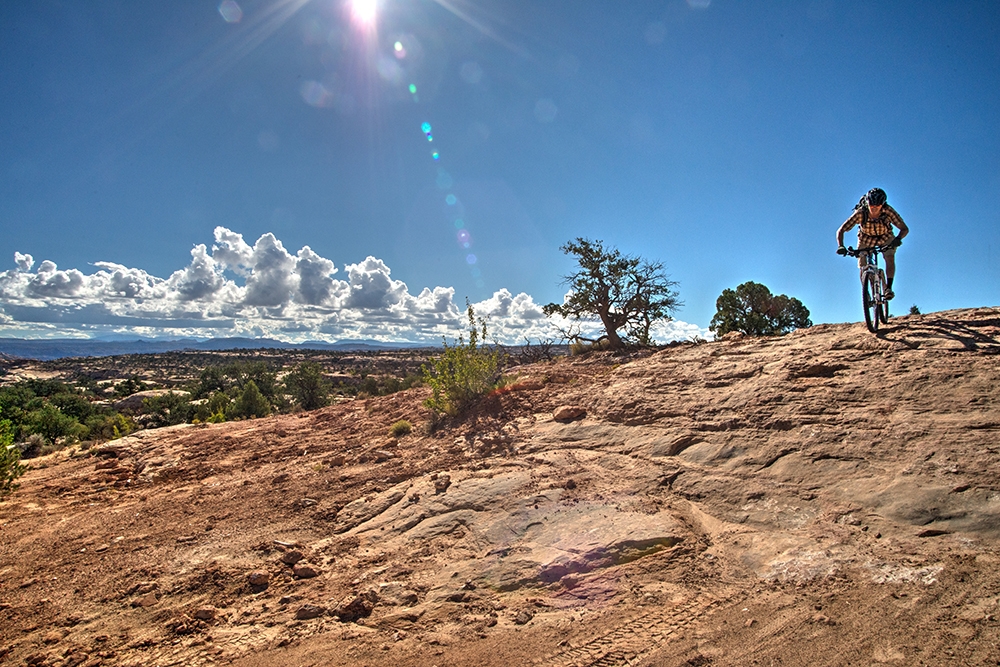
Sometimes, at the end of a day exploring a new trail or floating down the river, even if the air temperature had not reached 100 degrees, I would find myself just plain worn out by the combination of the heat, the brightness of the sun, and the dryness of the air — Moab’s triple threat environment.
Happily, with the help of friends who had lived here for years, I learned a few survival tips and pass them along to you, for your comfort and safety:
#
Prepare In Advance:
- Pre-hydrate: drink lots of liquids the day before your desert activity. Before you sleep, drink an extra big glass of water — even if you don’t feel thirsty right then. And again, as soon as you wake up, drink another. Stay ahead of the game.
- Take care of yourself every day, not just the day you are doing strenuous activity; several days in a row of hard exercise will eventually take its toll.
- Take more water than you think you’ll need for the trip you are planning. When people have ended up in serious trouble with dehydration in Moab, often, they had taken enough water for the trip they had *planned*. Problem was, *something unexpected happened* that extended their trip beyond what they had planned for, *and beyond what they had water for*. Some people, tragically, have even died as a result. Don’t let this happen to you.
- There is little shade, if any, on many of the Moab trails — wear appropriate clothing, bring a bandana to wet down and wear around your neck, definitely wear a hat.
- Feed your body with a combination of water, electrolytes and snacks.
- Outdoor laborers, athletes, elderly people and young children are the most frequently affected by heat-related illnesses. But, no one is immune when the weather is extremely hot. Certain medications such as diuretics, blood pressure medicine, allergy medications, cough and cold medicines, laxatives and benzodiazepines (for treatment of anxiety) can decrease the body’s ability to regulate its temperature, thus increasing the risk of heat exhaustion.
Know The Early Warning Signs and What To Do:
- Signs of heat exhaustion include headache, nausea, dizziness, weakness, irritability, thirst, cramps and heavy sweating. This is the time to call it a day and not continue with your activity (see “What to do” below.)
- Heat stroke patients will likely experience the following: hot, dry and perhaps flushed skin, elevated temperature, heart rate and respiration rate, altered mental status. If they do not get immediate treatment, it can result in seizures or coma, which may ultimately lead to death.
- What to do: it’s important to cool them off with water & shade and get immediate medical attention as this is a life threatening condition. The only remedy is to change their environment, — usually that means getting them back to the hotel, or, if needed, a hospital ASAP.
- Turn back, or head for safety earlier rather than later. Heat related problems can *escalate very quickly* from first onset to serious threat. As soon as you or someone in your party begins to feel the first signs of heat-related illness or dehydration, cut your plans short and head back to safety. Better safe, than sorry.
Plan For The Heat:
- The hottest time of the day in Moab is normally between 3 and 5 pm. It is best to be done with your strenuous activity by 1 pm, if not earlier. Consider relaxing or doing a water/ river activity in the afternoon.
- Do not overestimate your ability and underestimate the Moab environment. It can take a big bite out of you.
- Always have a map and know your bail-out options in case the day isn’t going as planned.
- Notify someone of where you are going and when you expect to be back. Then check back with that person when you do return safely.
Go With A Guide
[Rim Tours](https://rimtours.com/) and many other outfitters offer [guided tours of all kinds](https://rimtours.com/day-tour-list/). In addition to offering a safety net against the hazards listed above, you’ll learn about the natural history of the desert you’re visiting, and possibly make a new friend.