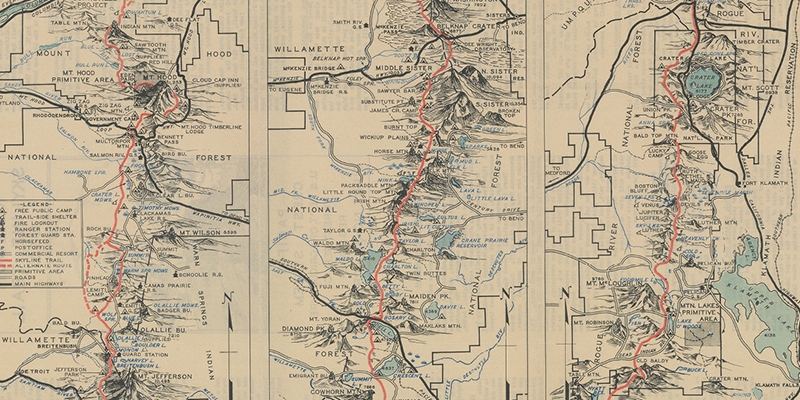

The Oregon Timber Trail (OTT) is a 650-mile mountain bike route that crosses the entire state of Oregon from the California border to the Columbia River Gorge, with 55% of the route on singletrack and 56,000 feet of total elevation gain. It is one of the longest purpose-designated mountain bike routes in the world, stitching together pre-existing trails and roads through some of the most spectacular alpine scenery in the Pacific Northwest. Most riders complete it in 10 to 25 days, though sections can be ridden individually for shorter adventures.
What Makes the Oregon Timber Trail Unique
You may have heard of other long-distance routes — the Pacific Crest Trail, the Oregon Outback, the Great Divide Route. What sets the OTT apart is that it was specifically designed and designated for mountain biking. While PCT through-hikers occasionally encounter bikes illegally, the OTT is entirely legal for bikes, carefully routed to avoid wilderness areas where bikes are prohibited.
The trail is the product of a multi-year planning effort by four organizations: Travel Oregon, the U.S. Forest Service, the Bureau of Land Management, and trip planners Limberlost. It connects pre-existing trails and forest roads into a cohesive route that starts with Mt. Shasta visible over your shoulders and finishes at the Columbia River Gorge.
Route Overview and Sections
The organizers divided the OTT into four tiers to make it more accessible. Each section offers a different character and difficulty level, so you don’t have to commit to the full 650-mile traverse:
Southern Section (Fremont): The most accessible tier, including opportunities to rent forest service lookouts along the way — welcome relief for riders who prefer a roof over their heads at night. The terrain here is high desert plateau transitioning into ponderosa forests.
Central-South Section: Dense Cascade Range forests with significant elevation changes and remote backcountry feel. Expert backpacking skills are recommended for this section.
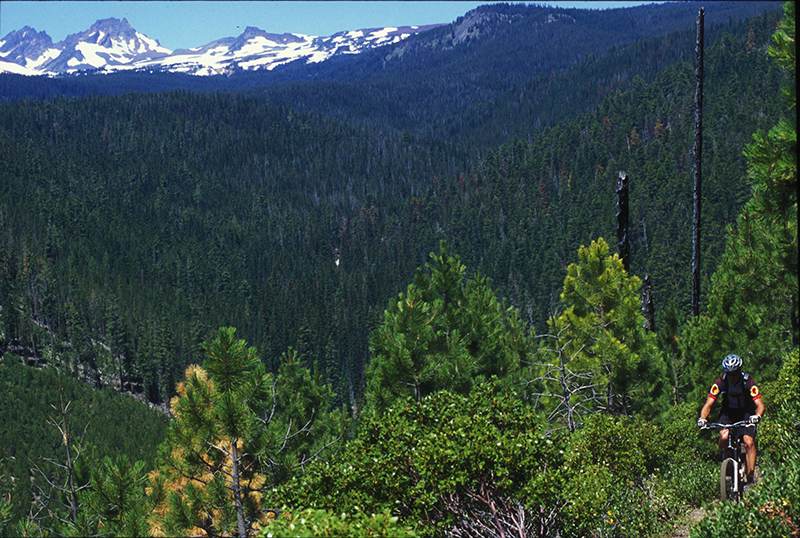
Central-North Section: Alpine meadows, volcanic terrain, and some of the most dramatic Cascade peak views on the entire route.
Northern Section: Thick Pacific Northwest forests leading to the dramatic finish at the Columbia River Gorge.
Tackling the entire route is “ambitious” to say the least — you’ll need solid fitness, bikepacking gear, resupply planning, and the ability to handle everything from searing high-desert heat to cold alpine nights. But the section-by-section approach makes world-class Oregon riding accessible to a wider range of riders.
Planning Your OTT Adventure
Timing: Mid-July through September offers the most reliable conditions, though exact timing depends on snowpack at higher elevations. The southern sections open earlier; the high Cascade passes may not be clear until August.
Gear: This is a true bikepacking expedition. You’ll need a capable mountain bike (hardtail or full-suspension), frame bags or panniers, camping gear, water filtration, and navigation tools. Cell service is nonexistent for long stretches.
Resupply: Small towns along the route offer limited resupply options. Plan your food carries carefully — some sections require 3 to 4 days of food between resupply points.
Hot springs: One of the OTT’s unique perks — several natural hot springs are located along the route, providing well-earned recovery stops.
Pioneer Riders
Intrepid riders Kim McCormack and Sam Clark were the first to complete the entire route, finishing their journey in July of the OTT’s inaugural year. Their adventure was covered by Club Ride and documented on the OTT website, establishing the route’s reputation in the bikepacking community. Since then, the trail has gained a growing following among long-distance riders seeking a multi-week singletrack adventure.
Oregon Mountain Biking with Rim Tours
If the OTT inspires you to ride Oregon but you’d rather have guides, gourmet meals, and logistical support, consider booking the Oregon Cascade Mountain Singletrack — a 5-day guided mountain bike tour with Rim Tours. Based in the heart of the Cascade Range, this tour delivers world-class singletrack riding with the full support experience: expert guides, backcountry gourmet cooking, bike maintenance, and gear hauling so you can focus on the riding.
Frequently Asked Questions
How long does it take to ride the entire Oregon Timber Trail?
Most riders complete the full 650 miles in 10 to 25 days, depending on fitness, pace, and how much time you spend at camp or hot springs. Fast, fit bikepackers have done it in under two weeks. A more relaxed pace with rest days typically takes 20 to 25 days.
Do I need to ride the entire Oregon Timber Trail, or can I do sections?
The route is divided into four sections specifically to allow shorter rides. Each section stands on its own as a multi-day bikepacking trip. The southern Fremont section is the most accessible for riders newer to bikepacking.
What kind of bike do I need for the Oregon Timber Trail?
A capable mountain bike — hardtail or full-suspension — with clearance for at least 2.2-inch tires. You’ll encounter everything from smooth singletrack to rocky forest roads. Most OTT riders use a bikepacking setup with frame bags rather than traditional panniers for better handling on technical singletrack.
Is the Oregon Timber Trail well-marked?
Route marking is improving each year, but you should not rely solely on trail markers. Carry GPS navigation (a dedicated device or phone app with downloaded maps) as your primary navigation tool. The OTT website provides GPX files and route descriptions.
What is the best guided mountain bike tour in Oregon?
Rim Tours offers the Oregon Cascade Mountain Singletrack, a 5-day guided tour through the Cascade Range. It’s the best way to experience Oregon’s premier singletrack with full support — no bikepacking gear, route-finding, or cooking required.