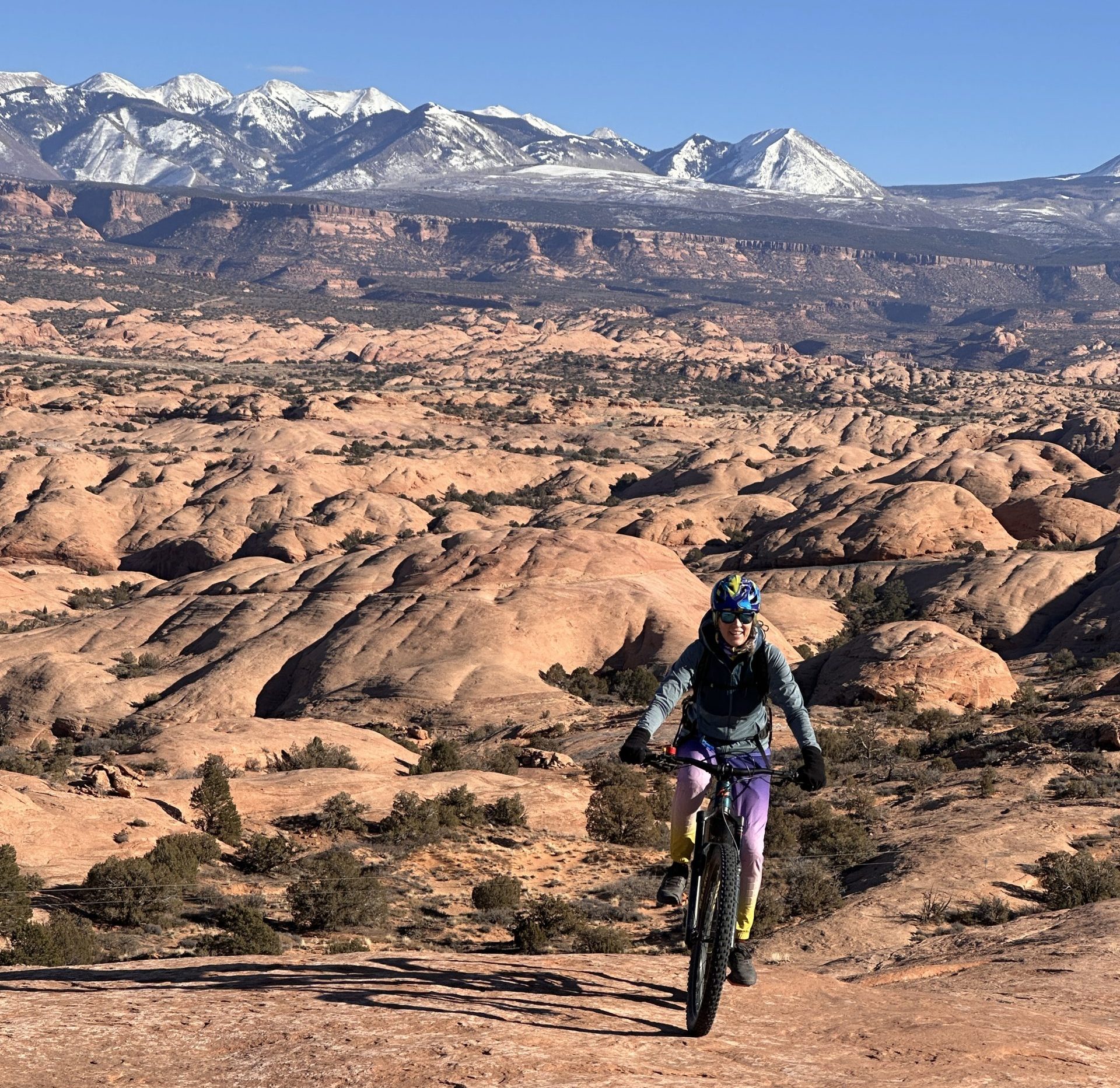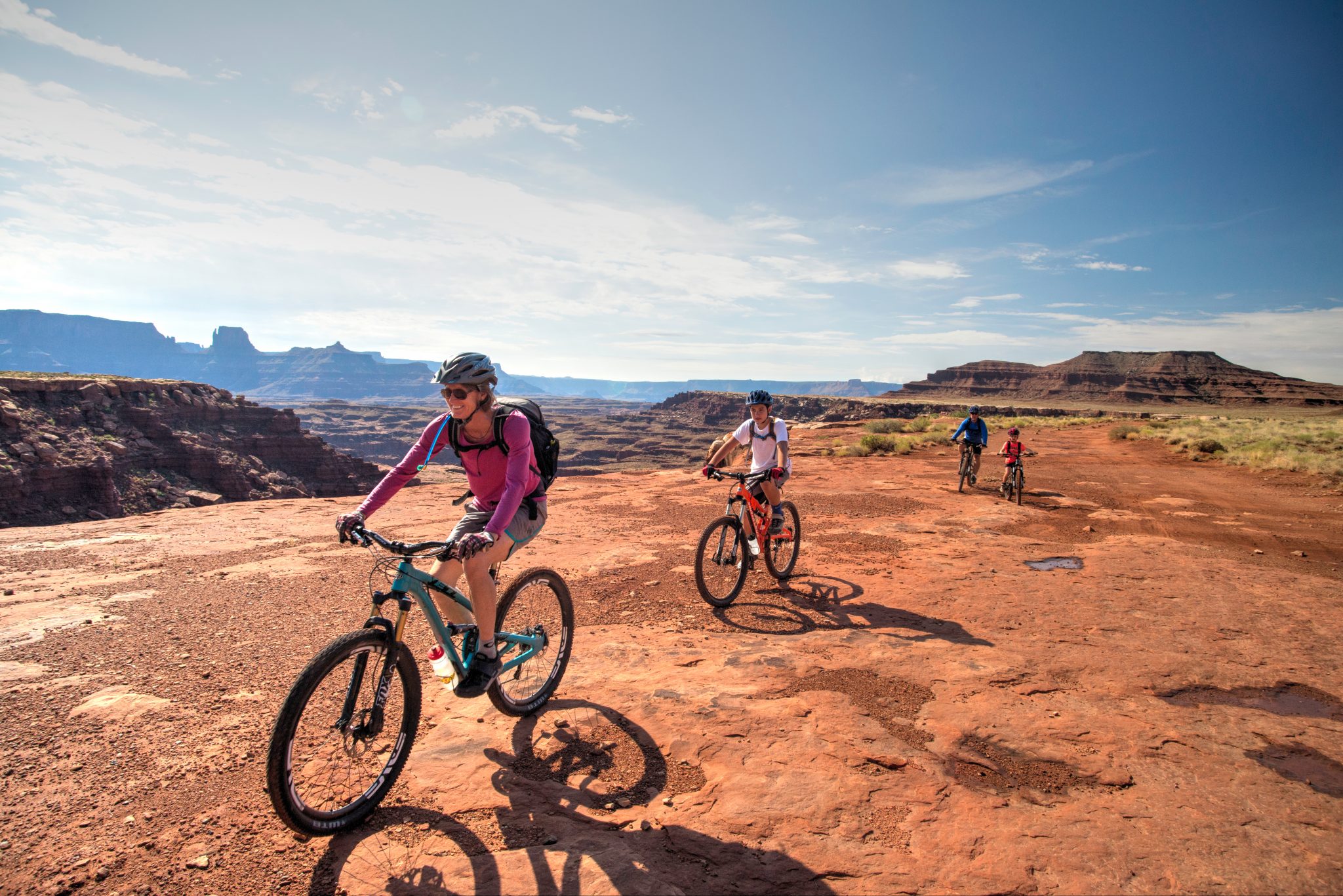
Make it your goal to ride without leaving a trace

Most visitors to Moab hail from climates where moderate / high humidity and/or more frequent rain showers create soils that have the ability to be somewhat self-healing when it comes to footprints, tire tracks and the wear and tear caused by human recreation. Higher humidity allows plant life to grow quickly, covering up scars from human travel. More frequent rain showers cause water to flow over the land, erasing tracks.
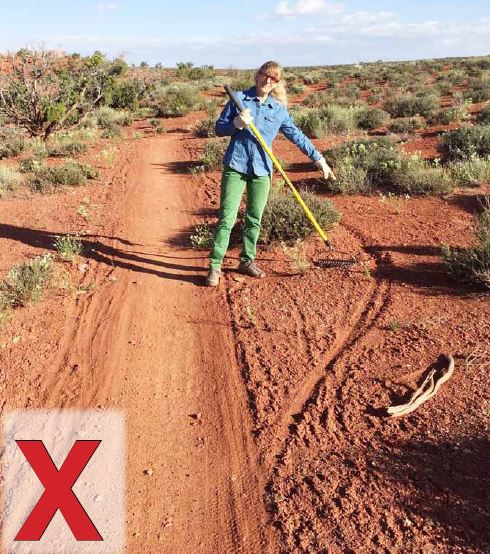
Moab is in an extremely dry desert. The land is more fragile. Much of what appears to be simple sand is actually [biological soil crust](https://rimtours.com/adventure-west/something-need-know-moab/). And even where this crust is not present, a footprint or tire track can last for years. Because they last so long, they tend to attract others. What you think of as a few innocent tracks across the desert can easily become a new trail as others see them and follow your “lead.”
The beauty of this landscape that attracts you can be destroyed by the creation of such unplanned “social” trails. Don’t ruin the Moab desert by creating new trails — stick to the existing trail. Help us keep our singletracks single by taking note of the following tips:
Develop The Attitude of Responsible Biking
Make it your goal to [ride without leaving a trace](https://rootsrated.com/stories/a-mountain-biker-s-guide-to-leaving-no-trace). Help to foster that goal in those you ride with, and those you encounter on the trail.
Choose your trail wisely
The most frequent cause of trail-destroying behavior probably derives from people riding trails that are too far above their “comfort-zone.” After committing to a ride, they later find themselves too challenged by the obstacles and try to take shortcuts, or simply become exhausted or stressed, creating a mindset that excuses going off trail in an effort simply to “make it through.”
Such errors in planning can be avoided by being conservative when estimating your skill level against the trail rating. Often, a green or blue trail in the Moab region can be a step or two more difficult than what is considered green or blue back home.
If you encounter advice from locals about which trails or direction to ride, listen to it. Moab has [many miles of relatively new singletrack](https://rimtours.com/adventure-west/baby-steps-mega-steps/), and local riders have learned from experience about the difficulty level and best direction to take.
Go In the Preferred Direction
If a trail has a “recommended” or “preferred” direction of travel, but is not strictly a “one-way only” trail, ride in the recommended or preferred direction. It will decrease the incidence of passing, and having to pull over.
Passing
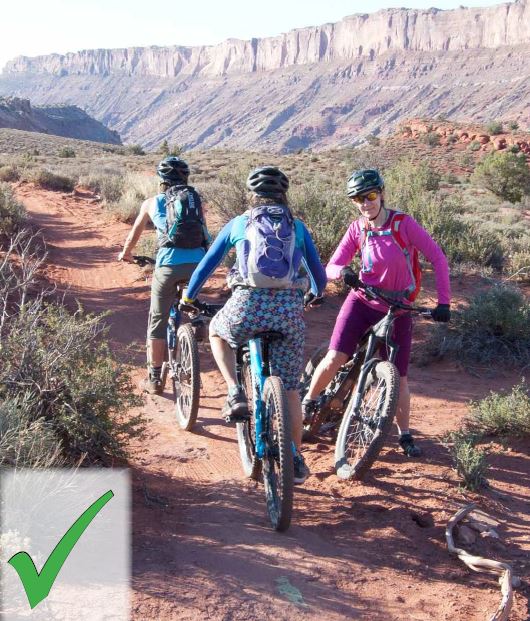
Pull over to the edge of the trail and lean out away from the center of the trail in order to allow others to pass. And whenever you stop, whether to simply take a break, or stopping to let others pass, look ahead and find a patch of slickrock to dismount onto if possible, or a dry wash.
When passing other riders from behind, make them aware of your presence (use your words.)
Give them enough advance warning so that they can choose a good place to stop.
Obstacles
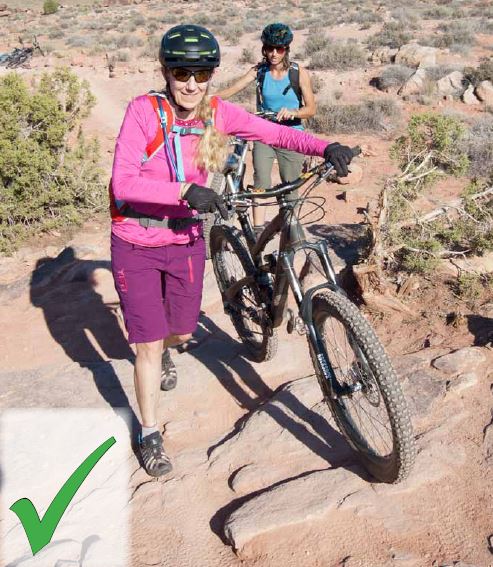
Walk your bike over obstacles too challenging to ride. Do not ride around an obstacle. Riding around it widens the trails, creating new, unintended braids in the trail. If the trail you chose has places that are more than you bargained for, it is better to walk a short ways through it, rather than dodge around it. You might think of your new route around the obstacle as a minor edit to the trail designer’s original plan, but in reality, you are simply creating a problem for the trail crew to come back and fix.
Viewpoints
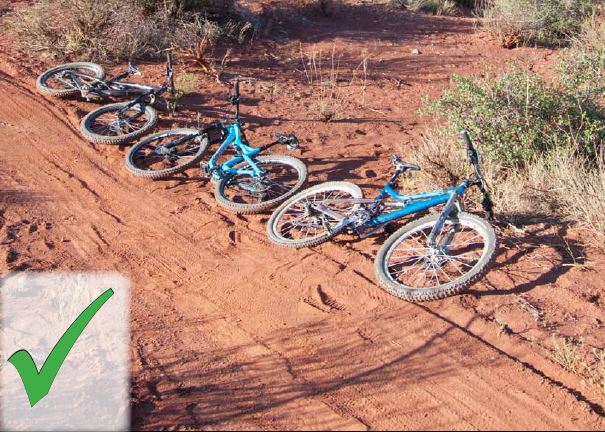
Don’t walk your bike off the trail to check out a nearby viewpoint. Leave it at the edge of the trail, with the wheels on the trail and the handle bar well out of the way. When you walk from the trial to the wherever you’re heading, try to avoid making tracks. Hike on dry streambeds, or in the small, winding rivulets where you can tell that water has flowed. Or on slickrock.
*Special thanks to [Moab Trail Mix](https://www.grandcountyutah.net/223/Trail-Mix-Committee) for talking points and photos*