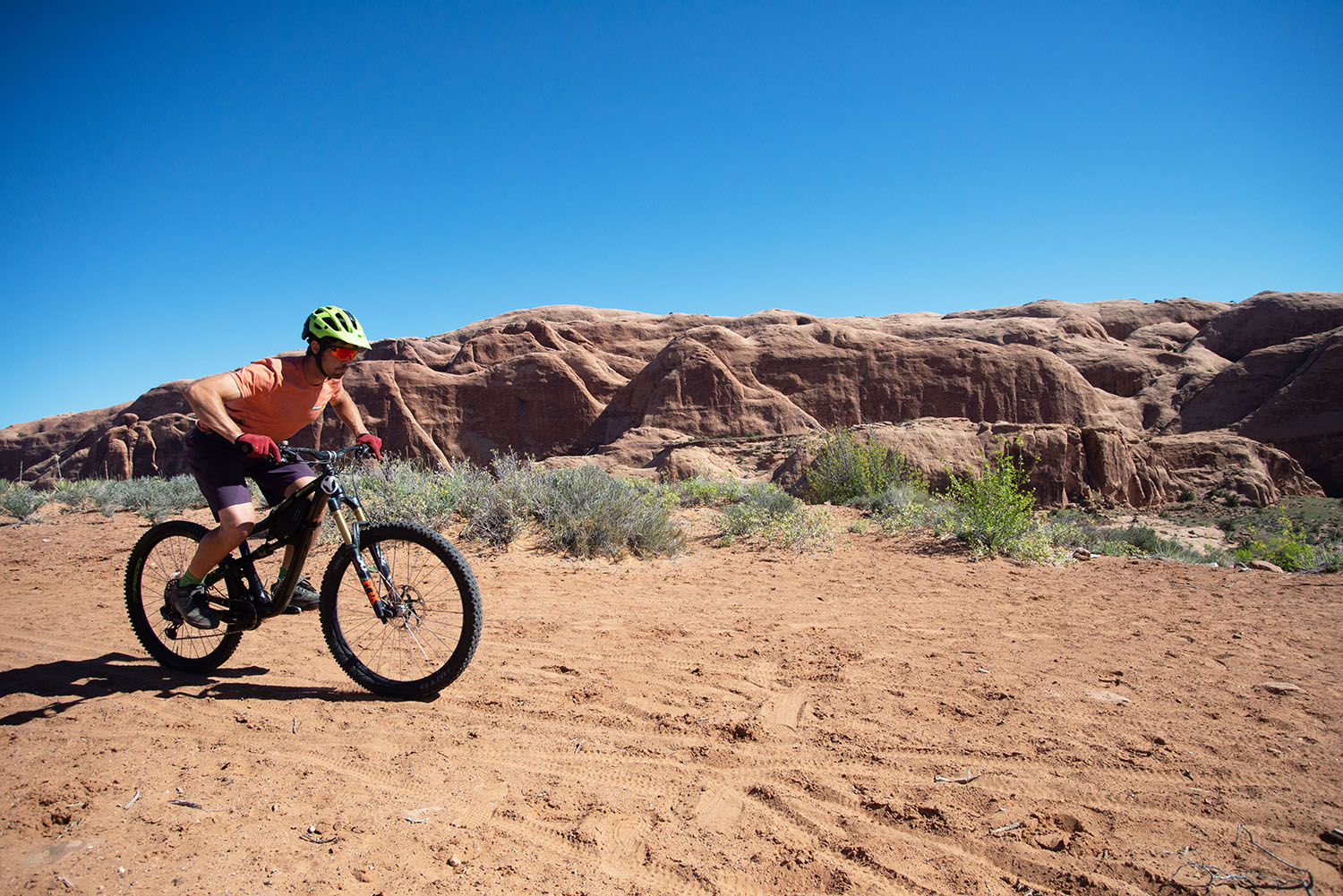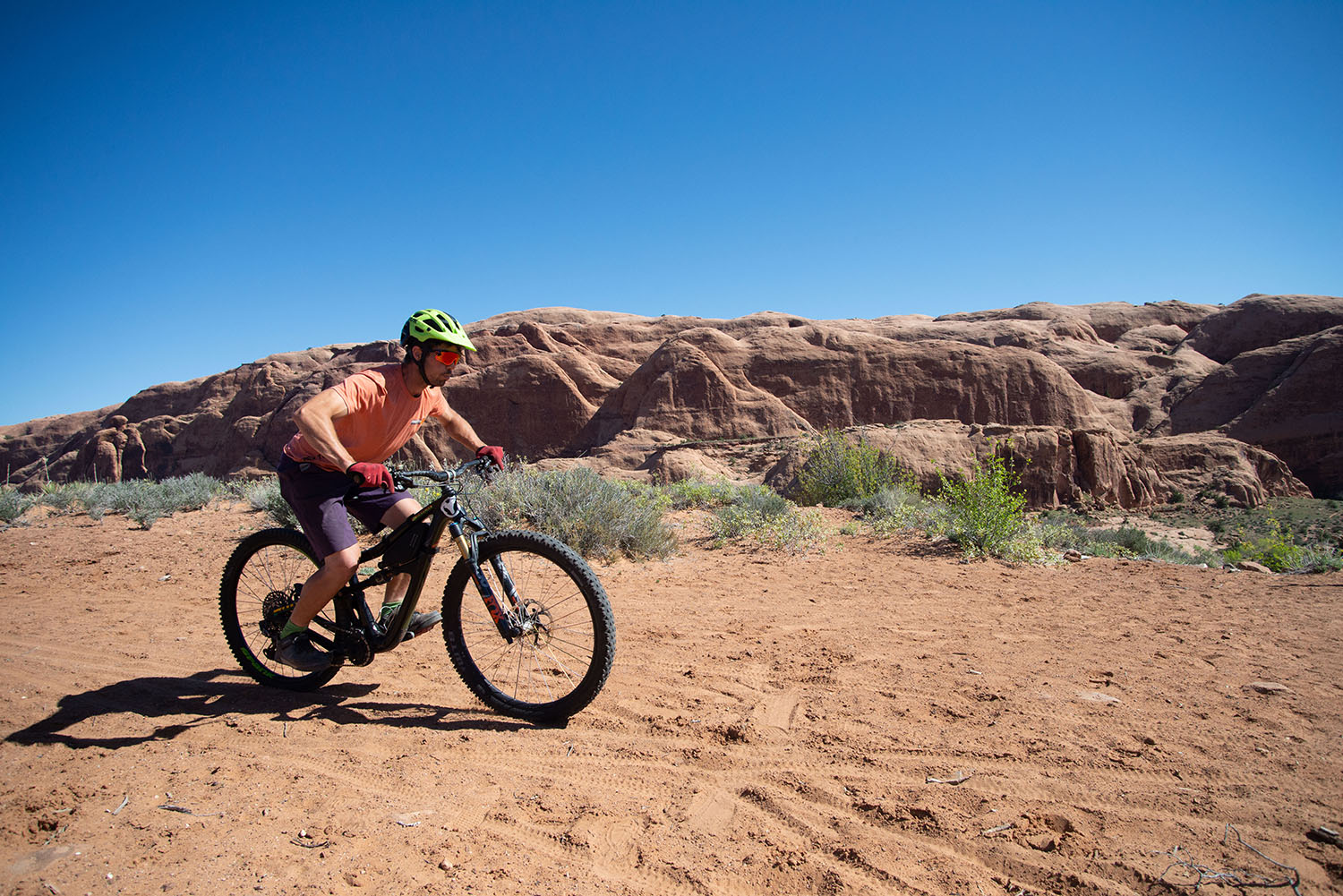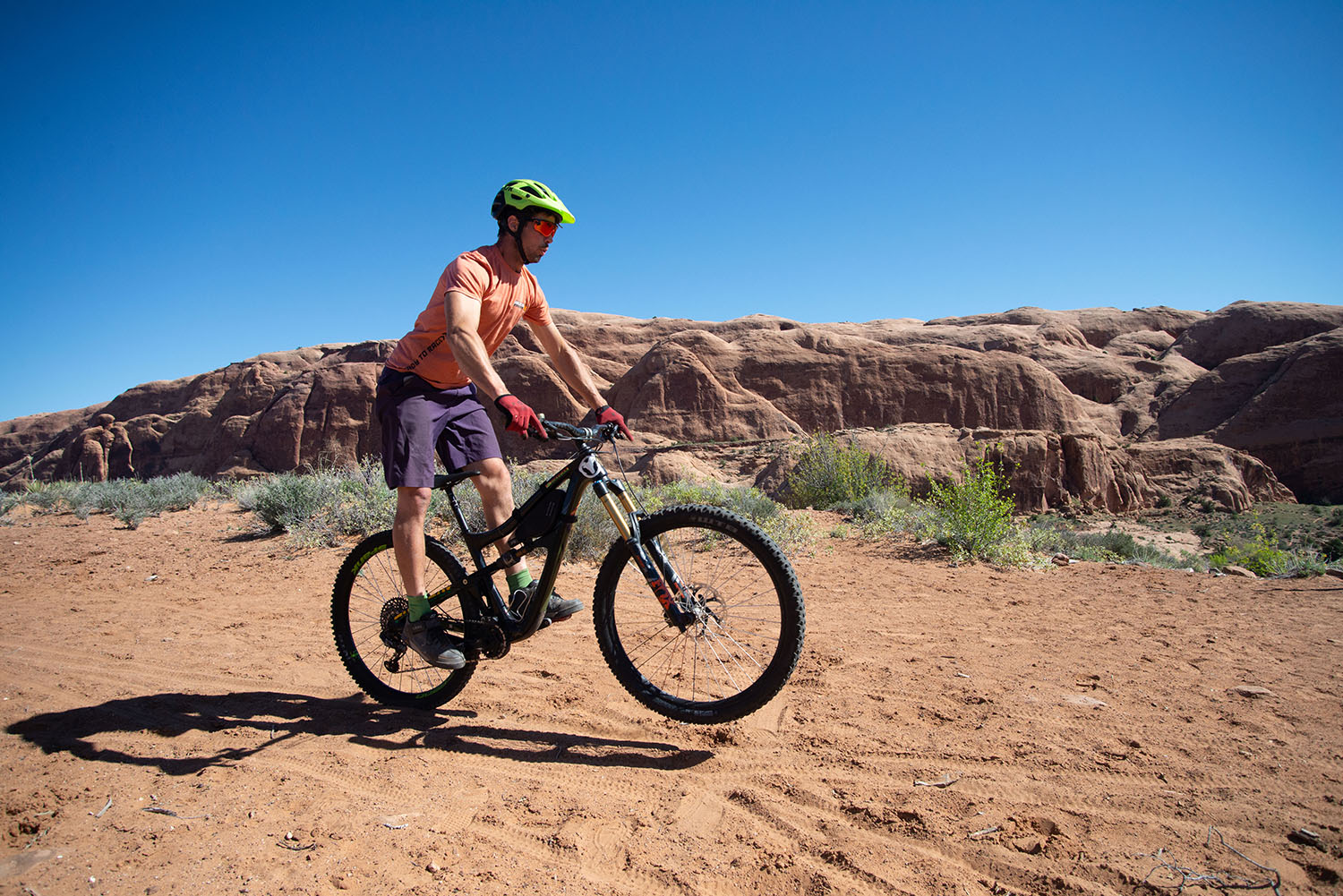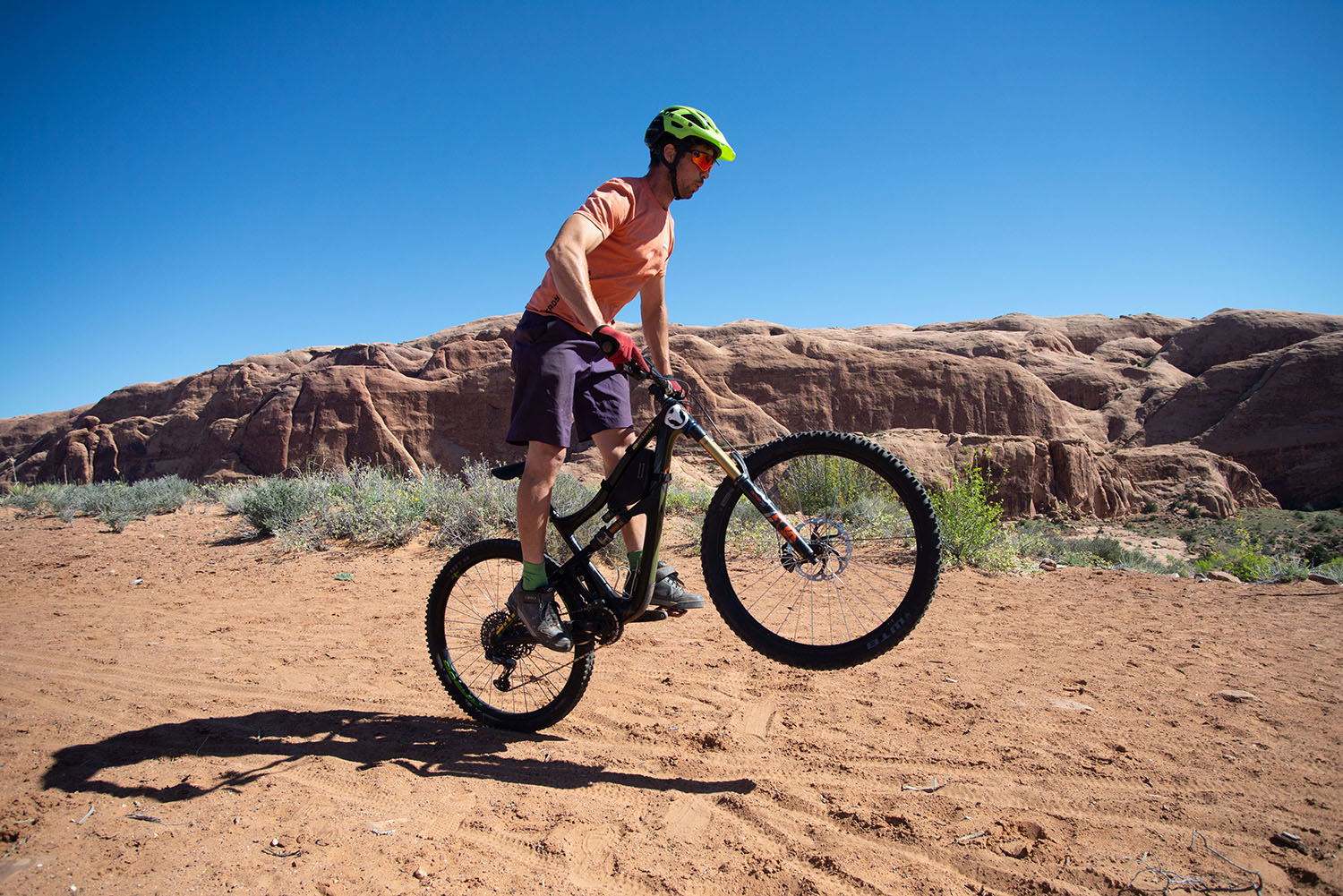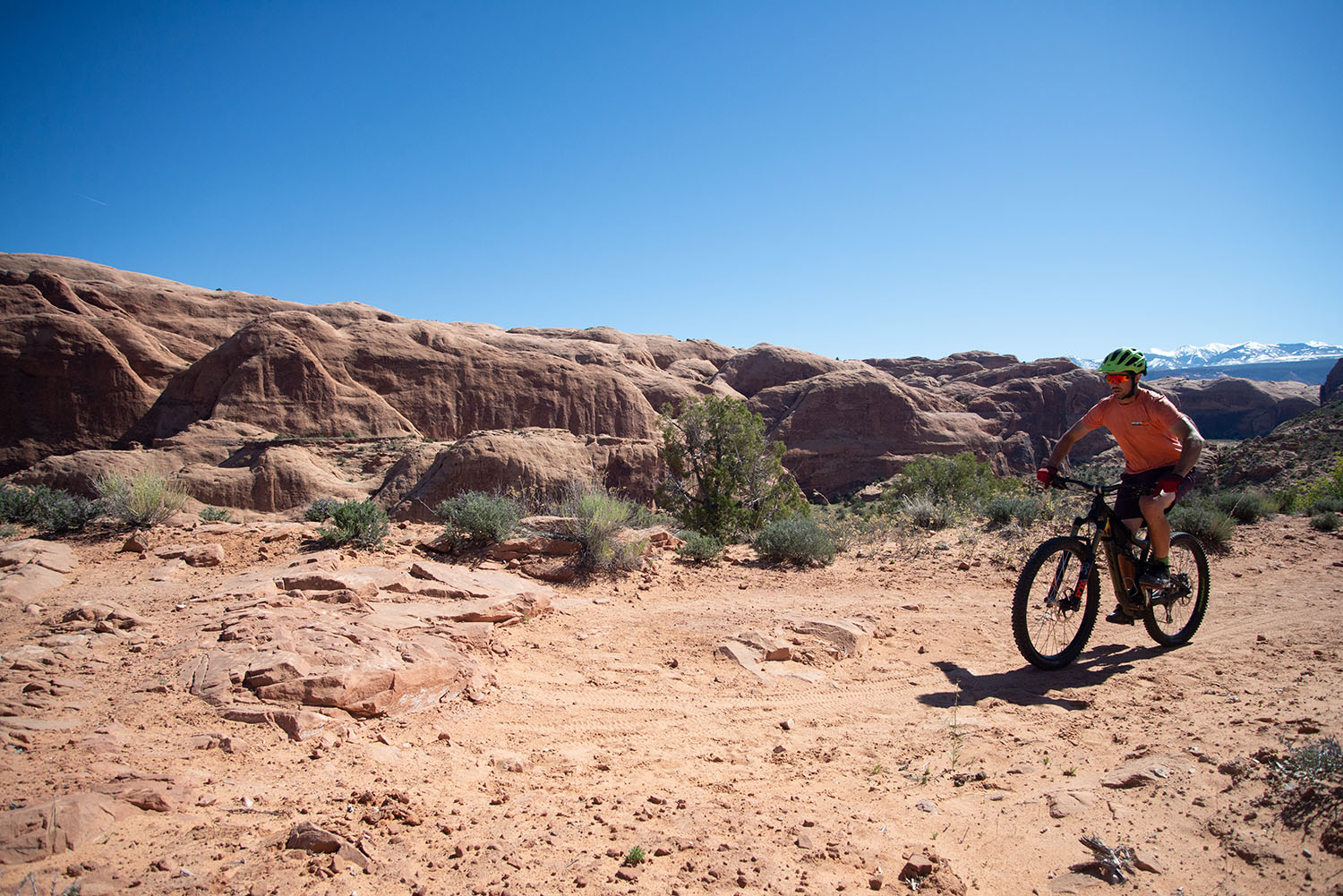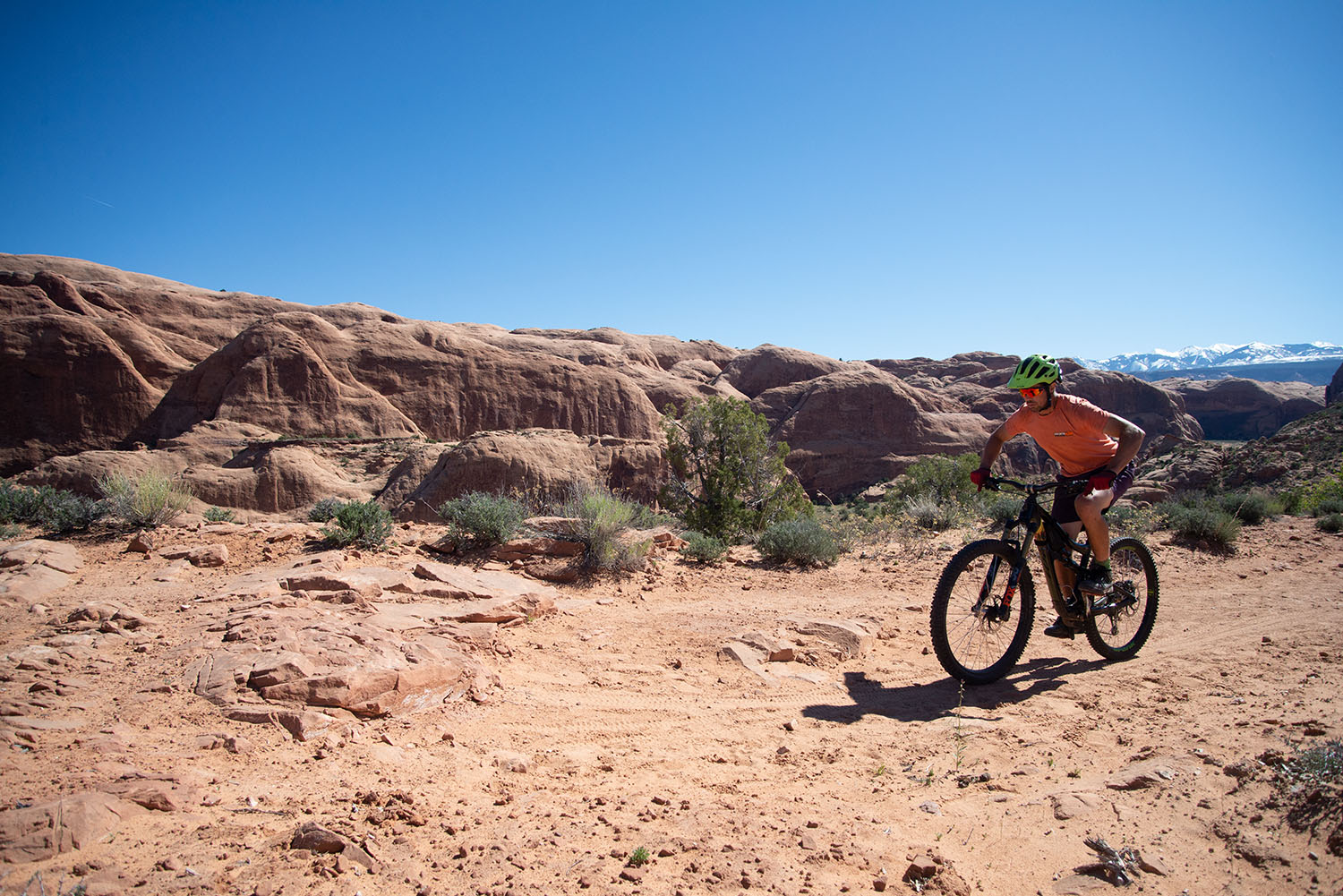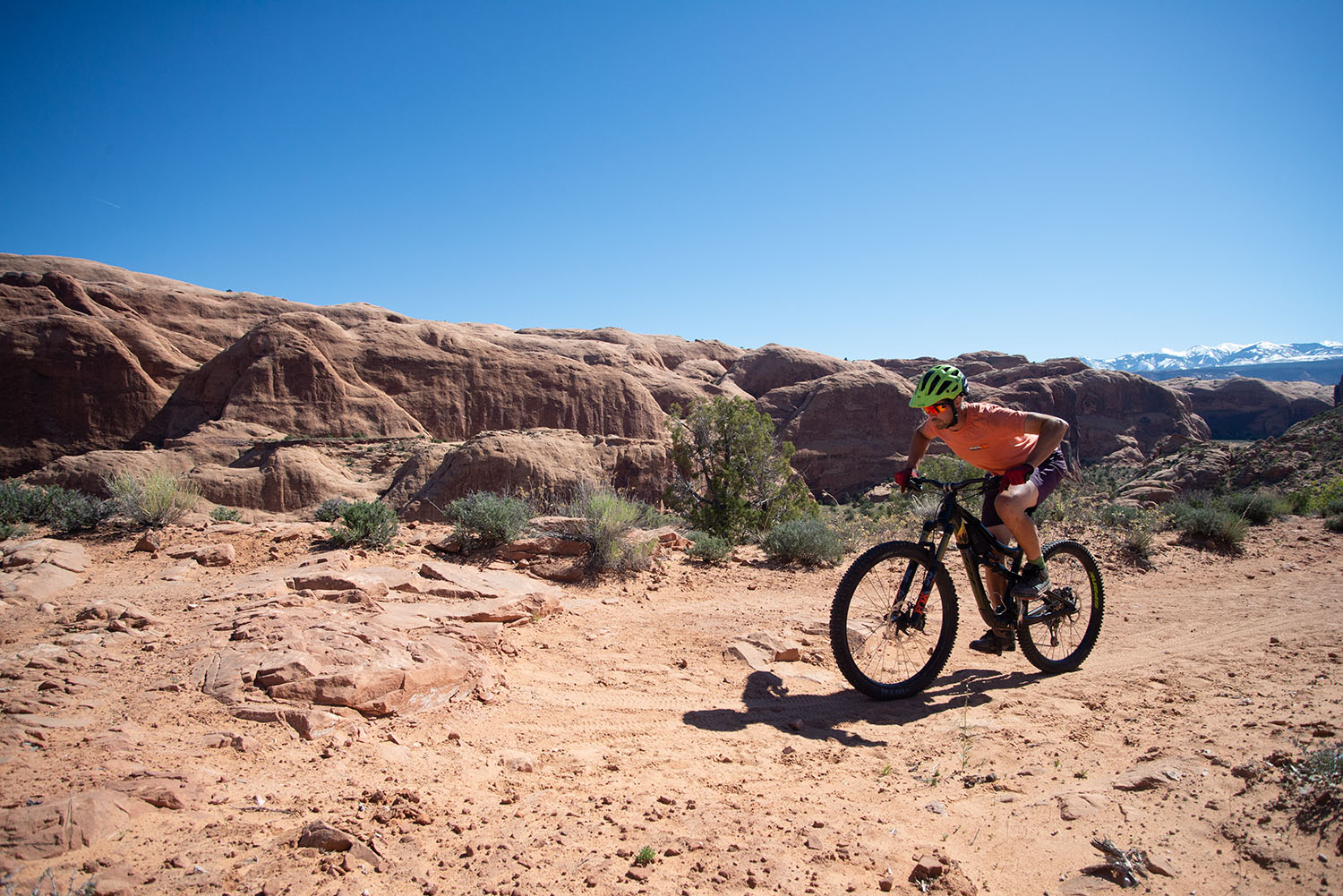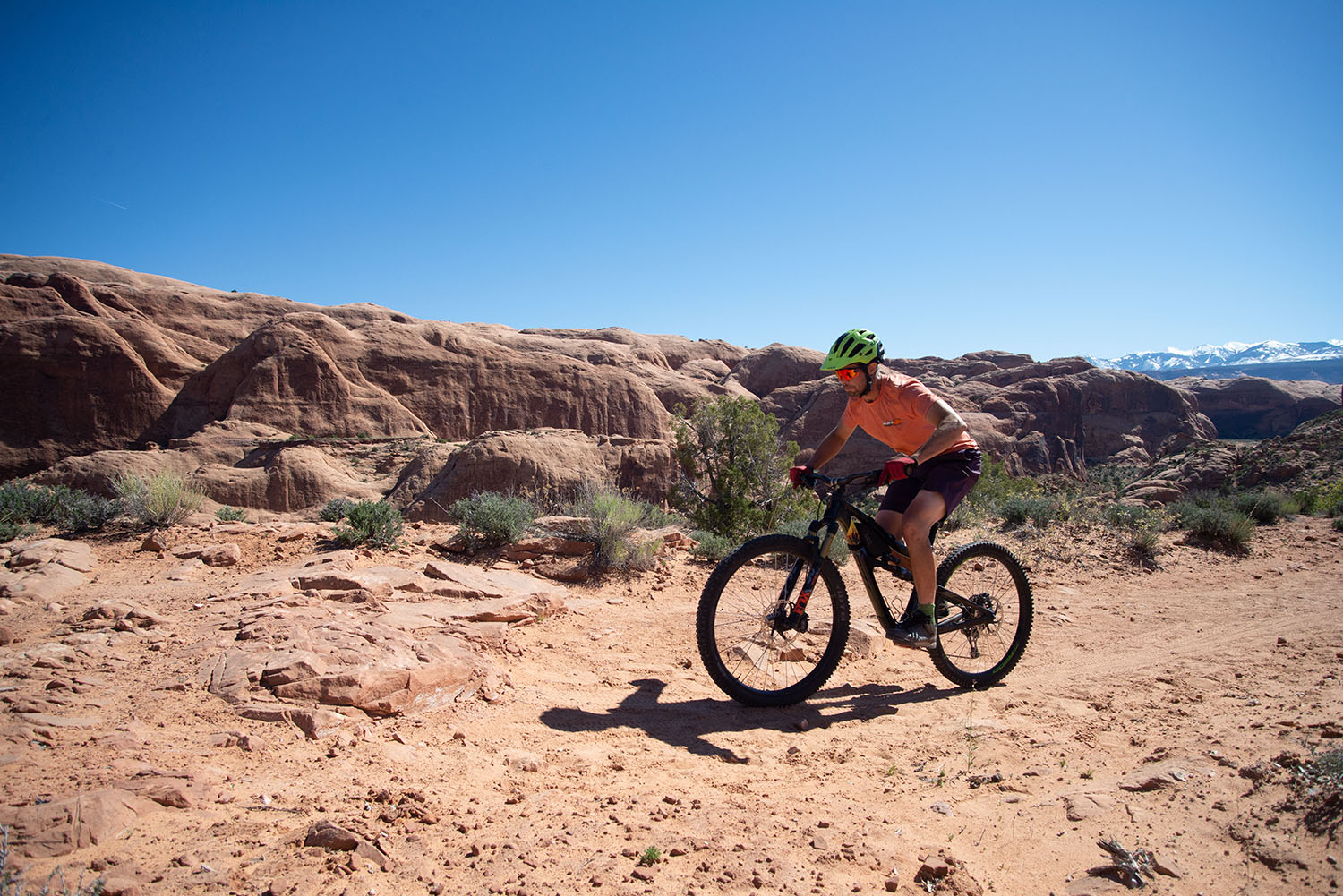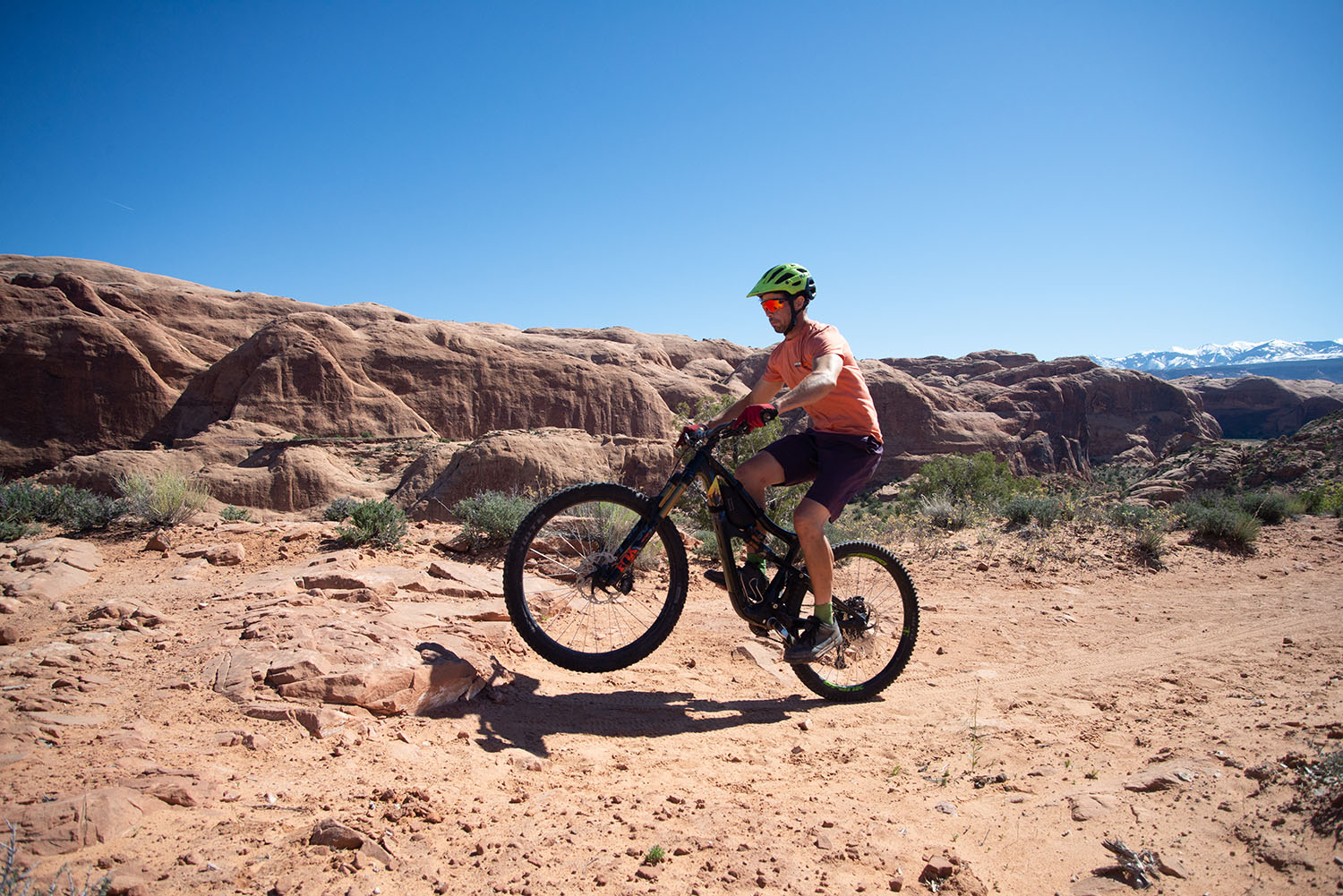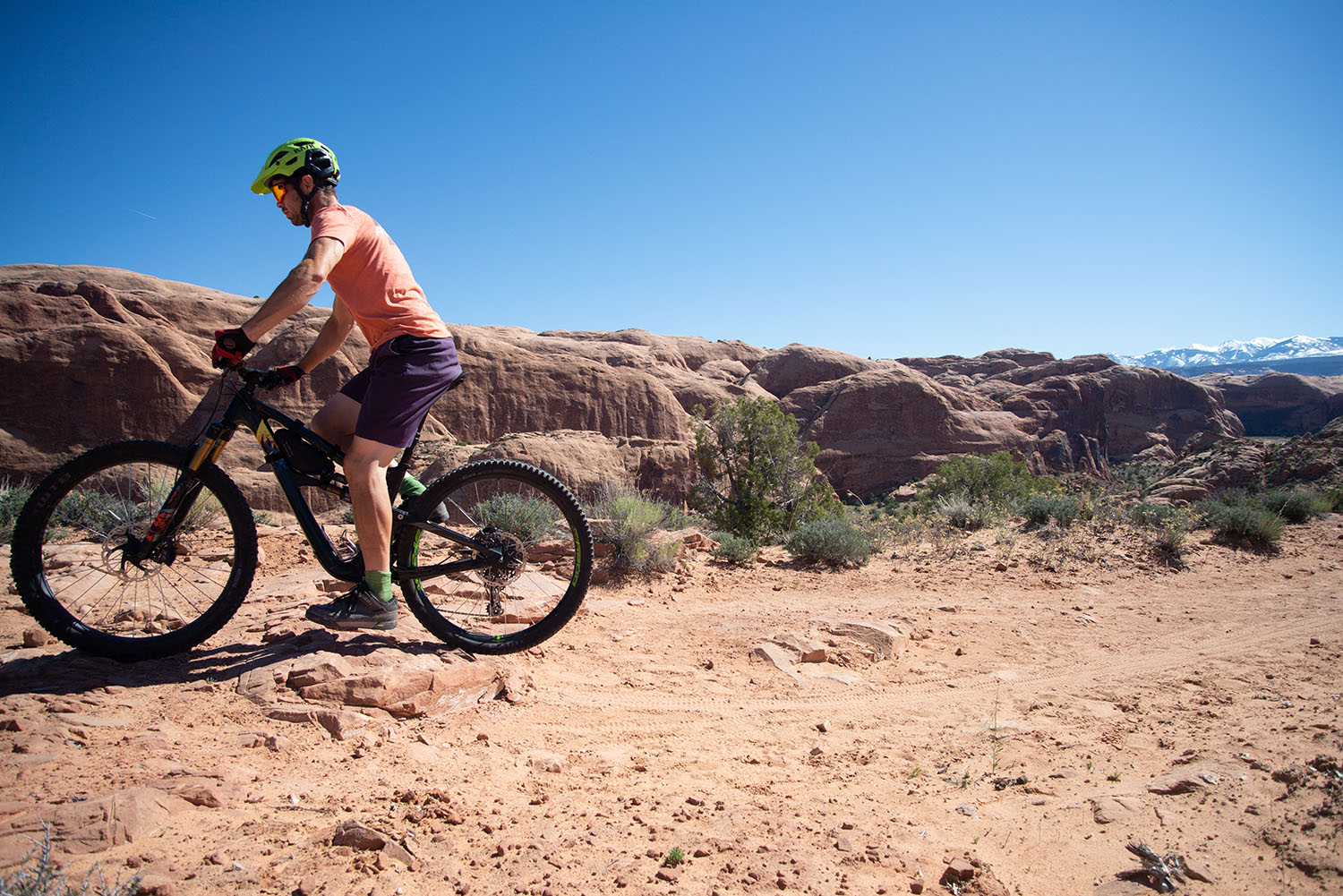
The front wheel lift is the single most important mountain bike skill for riding Moabโs rocky terrain, and mastering two simple variations โ the basic coasting lift and the pedaling lift โ will transform your experience on nearly every trail in the area. These are not showy tricks. They are foundational techniques that let you roll over square-edged rocks, span small holes, and maintain flow on terrain that would otherwise jar you to a stop. Rim Tours guides teach these skills daily, and most are certified mountain bike instructors who consider front wheel lifts the gateway to confident desert riding.
Why Front Wheel Lifts Matter in Moab
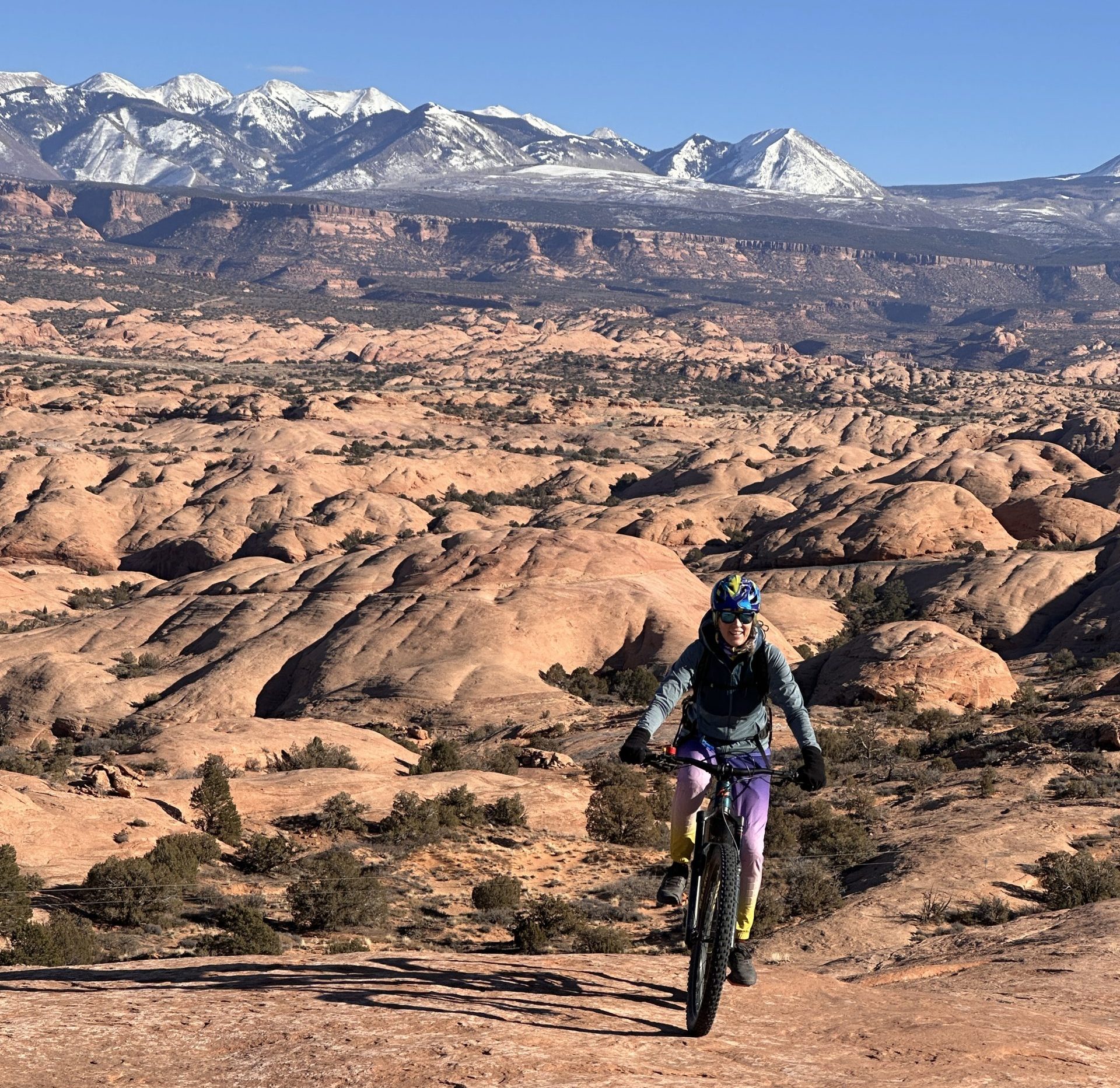
Moab riding can be described in one word: rocky. Whether it is the smooth, rounded sandstone domes of the Slickrock Trail, the chunky ledges of Captain Ahab on Amasa Back, or the embedded rock gardens on the White Rim, the terrain here is among the rockiest mountain biking anywhere in the world.
Without front wheel lifts, every rock is a collision. Your front tire hits the obstacle square-on, your momentum dies, your arms absorb the impact, and you feel beaten up after just a few miles. With front wheel lifts, those same rocks become features you pop over, maintaining speed and flow. The difference in ride quality is dramatic. Riders who learn these skills in the morning are visibly smoother and more confident by the afternoon.
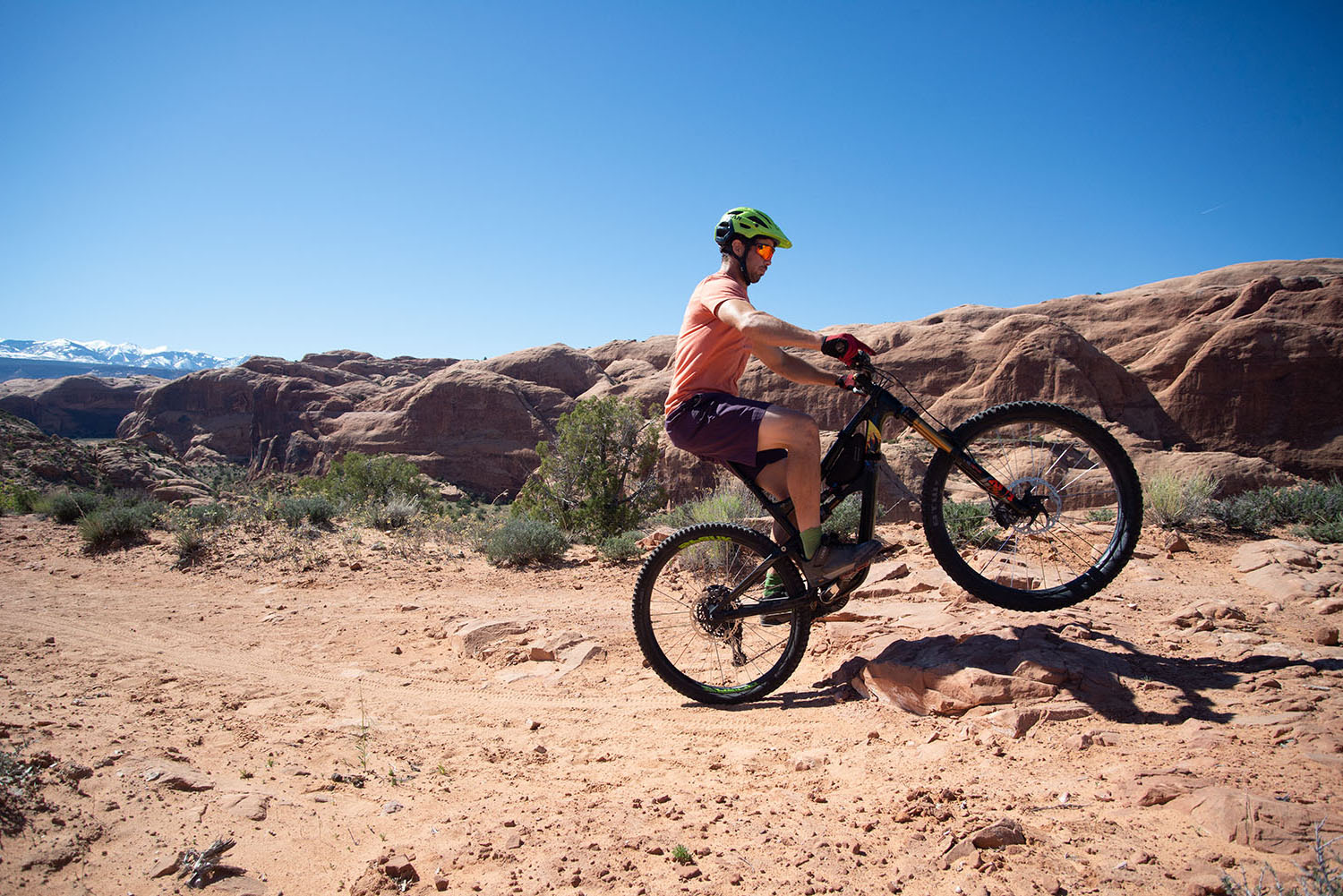
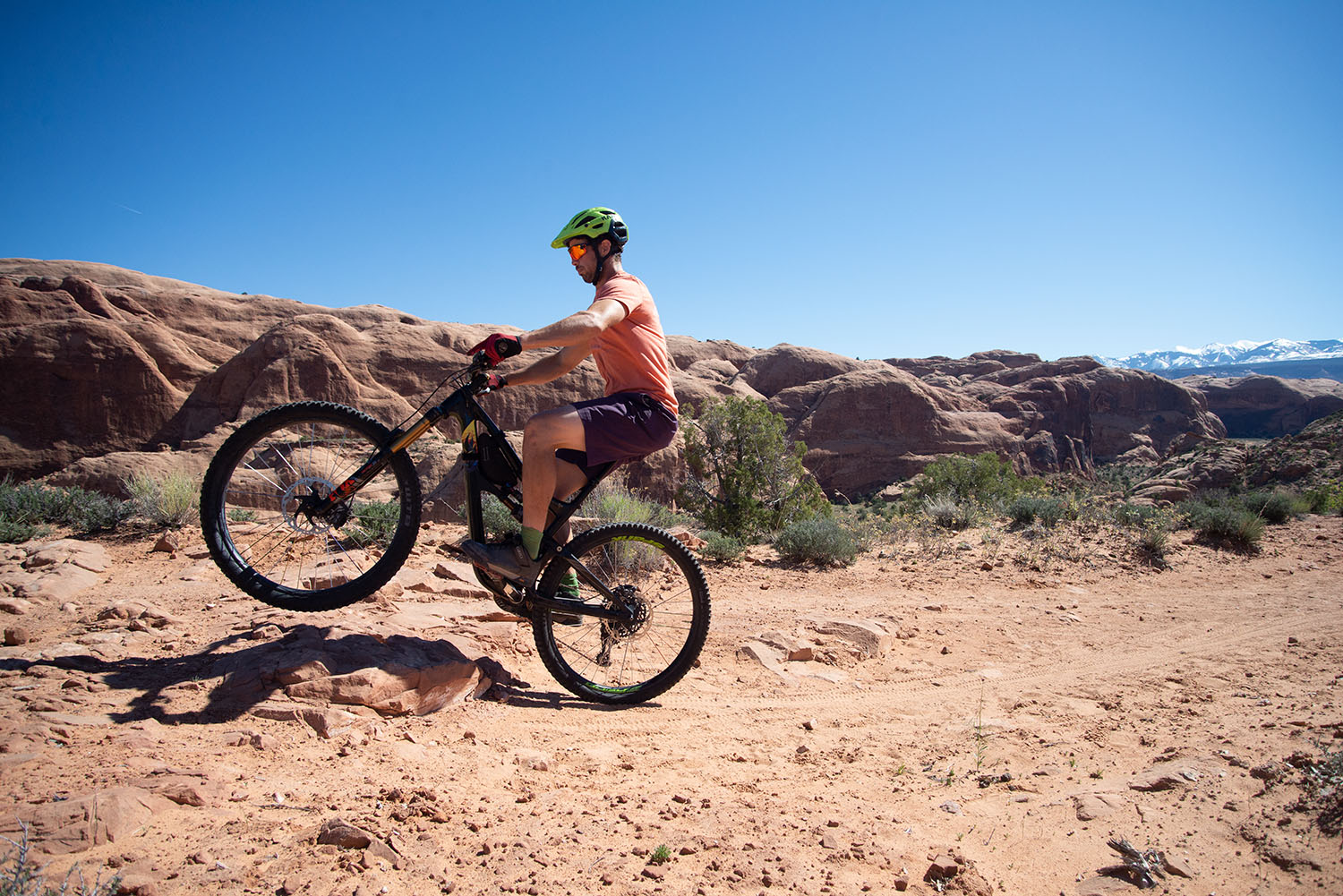
Front wheel lifts are a more subtle, controlled version of the โmanualโ and โwheelieโ that you may remember from childhood. You are not trying to ride on your back wheel for distance. You are lifting the front wheel just enough to clear an obstacle, typically 4-12 inches off the ground, for a fraction of a second.
The Basic Front Wheel Lift (For Coasting and Descending)
The basic front wheel lift is used when you are coasting downhill or on flat terrain. Here is the technique broken down step by step:
-
Start in the Ready Position โ Stand on your pedals with your cranks level (3 oโclock and 9 oโclock positions). Arms slightly bent, knees slightly bent, weight centered over the bottom bracket. This is your default position for all technical riding.
-
Preload (compress) โ Drop your hips and torso straight down toward the bike while stomping into the pedals. This compresses your suspension (or, on a hardtail, loads the tires and frame). Think of it as coiling a spring.
-
Explode upward โ In one fluid motion, extend your legs and lift your torso back to standing height. Allow the front wheel to lift off the ground as the bikeโs suspension rebounds.
-
Guide the front wheel over the obstacle โ The wheel does not need to go high. Just high enough to clear the rock. Let it land softly on the other side and continue riding.
The critical point that many riders miss: this movement is initiated through the feet, not the hands. Do not pull back on the handlebar. Pulling the bars results in a sideways, uncontrolled yank that sends you off-line. The power comes from the stomp-and-extend through your legs. The handlebars come up as a consequence of the body movement, not as the cause of it.
Input force matches output: the harder you stomp, the higher the lift. Start small on flat ground with no obstacle, just practicing the preload-and-pop motion until it feels natural. Then apply it to progressively larger rocks on the trail.
The Pedaling Front Wheel Lift (For Climbing)
The pedaling front wheel lift is used when you are seated and pedaling uphill. This is the technique that separates riders who clean technical climbs from riders who walk them. It is especially critical on ledgy trails like Captain Ahab, Gold Bar Rim, and the technical sections of North Klondike Singletrack.
Sometimes called a โquarter-turn punch,โ this technique uses a burst of pedal force to pop the front wheel up and over a square-edged rock mid-climb:
-
Set up your pedal position โ Bring your dominant pedal to just past top-dead center (about 1 oโclock if viewed from the right side of the bike). Your seat should be at normal climbing height.
-
Lean forward to preload โ Lean your chest toward the handlebars, compressing the front of the bike and loading weight onto the front tire.
-
Punch and extend โ In a single coordinated movement: punch the pedal down hard, extend your arms to push the bars away from you, and lift your chest upward. This combination pops the front wheel off the ground.
-
Guide over the obstacle โ The front wheel lifts just enough to clear the ledge or rock. Once the front wheel is on top of the obstacle, shift your weight forward and your rear wheel will follow up and over.
The timing is the hardest part. Practice it as an isolated maneuver first, on flat ground, until you can consistently lift the front wheel 4-6 inches with a single pedal stroke. Then apply it to progressively larger obstacles on trail.
Safety note: Always keep a finger covering your rear brake lever when practicing front wheel lifts. The rear brake is your emergency stop and will bring your front wheel back down immediately if the lift goes too high.
Where to Practice in Moab
The best place to practice front wheel lifts is on flat, obstacle-free ground. A parking lot, a smooth section of trail, or a quiet road all work. Get the motion down without the pressure of an obstacle in front of you.
Once you have the basic motion, apply it everywhere. Use it constantly on every ride, even over small rocks that you could easily roll over. The more you practice, the more automatic it becomes, and when you encounter a rock that actually requires a front wheel lift, you will execute it without thinking.
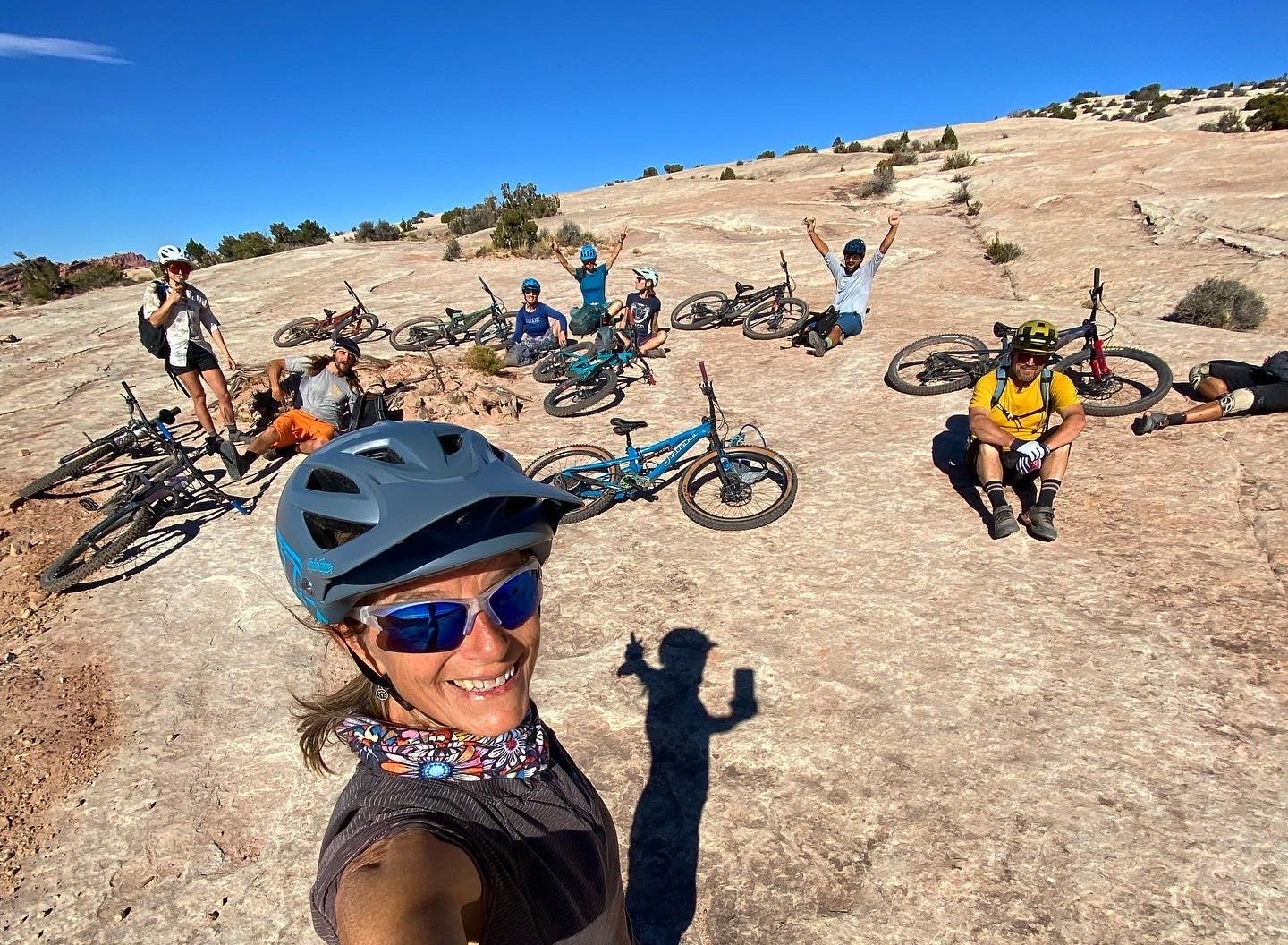
On guided tours with Rim Tours, your guide can provide real-time coaching on front wheel lifts and other foundational skills. Most of our guides are certified mountain bike instructors who love nothing more than watching a guest unlock a new skill and immediately ride better.
Beyond Front Wheel Lifts
Once you have front wheel lifts dialed, the next skills to develop are:
- Rear wheel lifts โ The counterpart to front wheel lifts, used to get your back tire up and over obstacles
- Bunny hops โ Combining front and rear lifts to clear obstacles with both wheels simultaneously
- Line choice โ Reading the trail ahead to identify the smoothest path through rock gardens
- Body positioning โ Shifting weight fore and aft to maintain traction and control on steep terrain
For dedicated skills instruction in Moab, check out Moab Mountain Bike Instruction (MMBI), the only skills-instruction-specific company in Moab. Their instructors, led by Sylvi Fae and Wendy Palmer, offer clinics ranging from beginner fundamentals to advanced technique. Contact them at 435-259-9554.
Frequently Asked Questions
How long does it take to learn front wheel lifts?
Most riders can perform a basic front wheel lift within 15-30 minutes of focused practice. Getting the timing and force calibrated for real trail obstacles takes a few rides. The pedaling version typically takes longer because the coordination of pedal punch and body movement is more complex.
Do I need a full-suspension bike for front wheel lifts?
No. Front wheel lifts work on hardtails, full-suspension bikes, and even rigid bikes. The โpreloadโ step compresses whatever give the bike has (suspension, tire, frame flex). On a rigid bike, you are loading the tire and using more body movement, but the technique is fundamentally the same.
Can I learn front wheel lifts on a guided tour?
Absolutely. Rim Tours guides routinely coach these skills during rides. If skills instruction is your primary goal, ask about our instructional tour / skills clinic, which is specifically designed around building foundational and intermediate riding skills on Moab terrain.
What is the difference between a front wheel lift and a wheelie?
A front wheel lift is a brief, controlled pop of the front wheel to clear an obstacle. A wheelie involves sustained pedaling with the front wheel in the air, balanced on the rear wheel. Front wheel lifts are a practical trail skill. Wheelies are a fun party trick that can also be useful but require significantly more practice and balance.