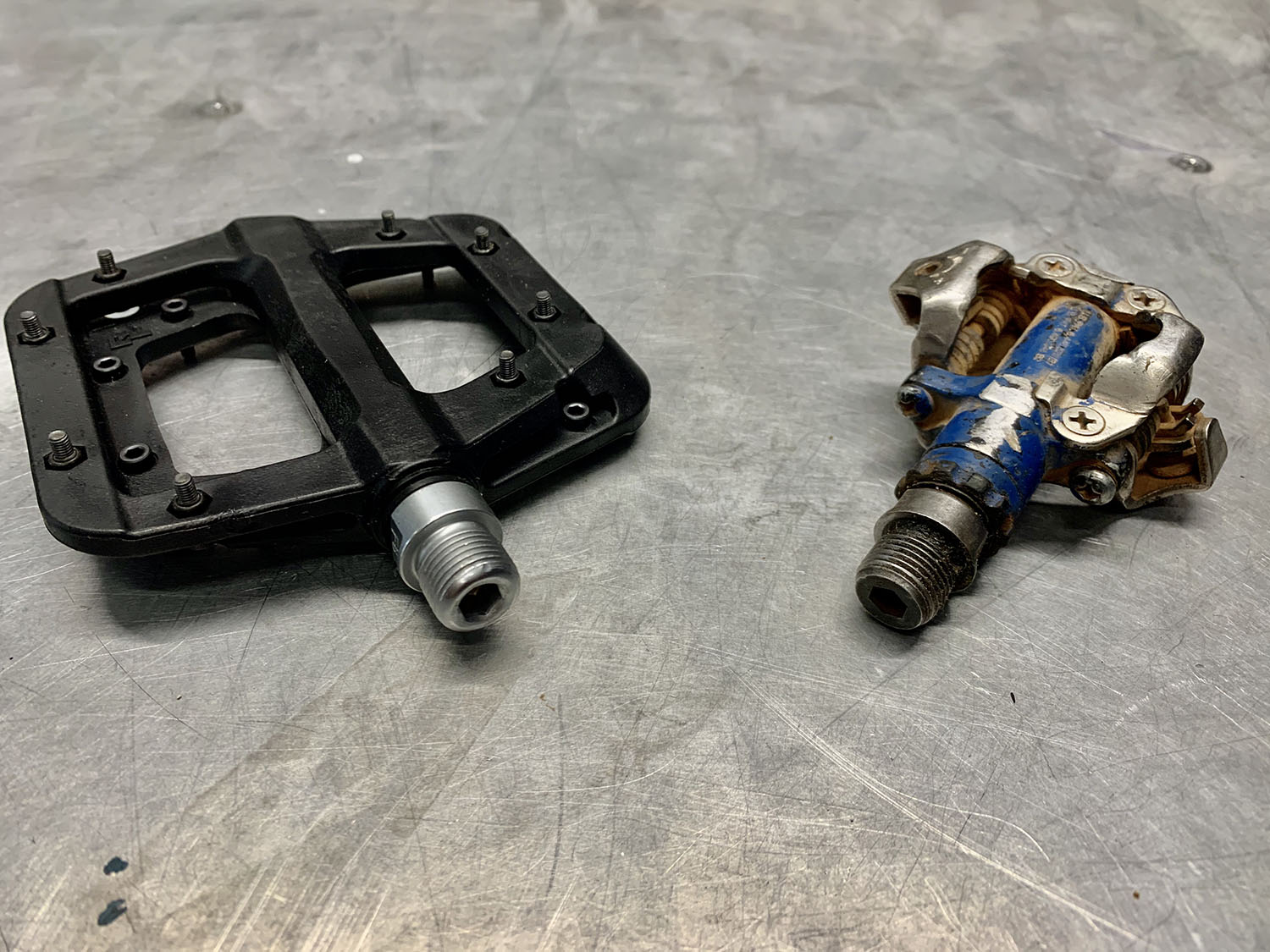
For mountain biking in Moab, flat pedals are the better choice for most riders, especially on guided tours and multi-day trips where rocky terrain, frequent hike-a-bike sections, and variable conditions make the quick-release freedom of flats a significant advantage over clipless pedals. That said, experienced riders who are comfortable unclipping in technical situations may prefer the power transfer and pedal security of SPD or similar clipless systems. After decades of guiding riders of all levels through Moab’s rocky landscape, Rim Tours guides have strong opinions on this debate, and they lean heavily toward flats.
The Case for Flat Pedals in Moab
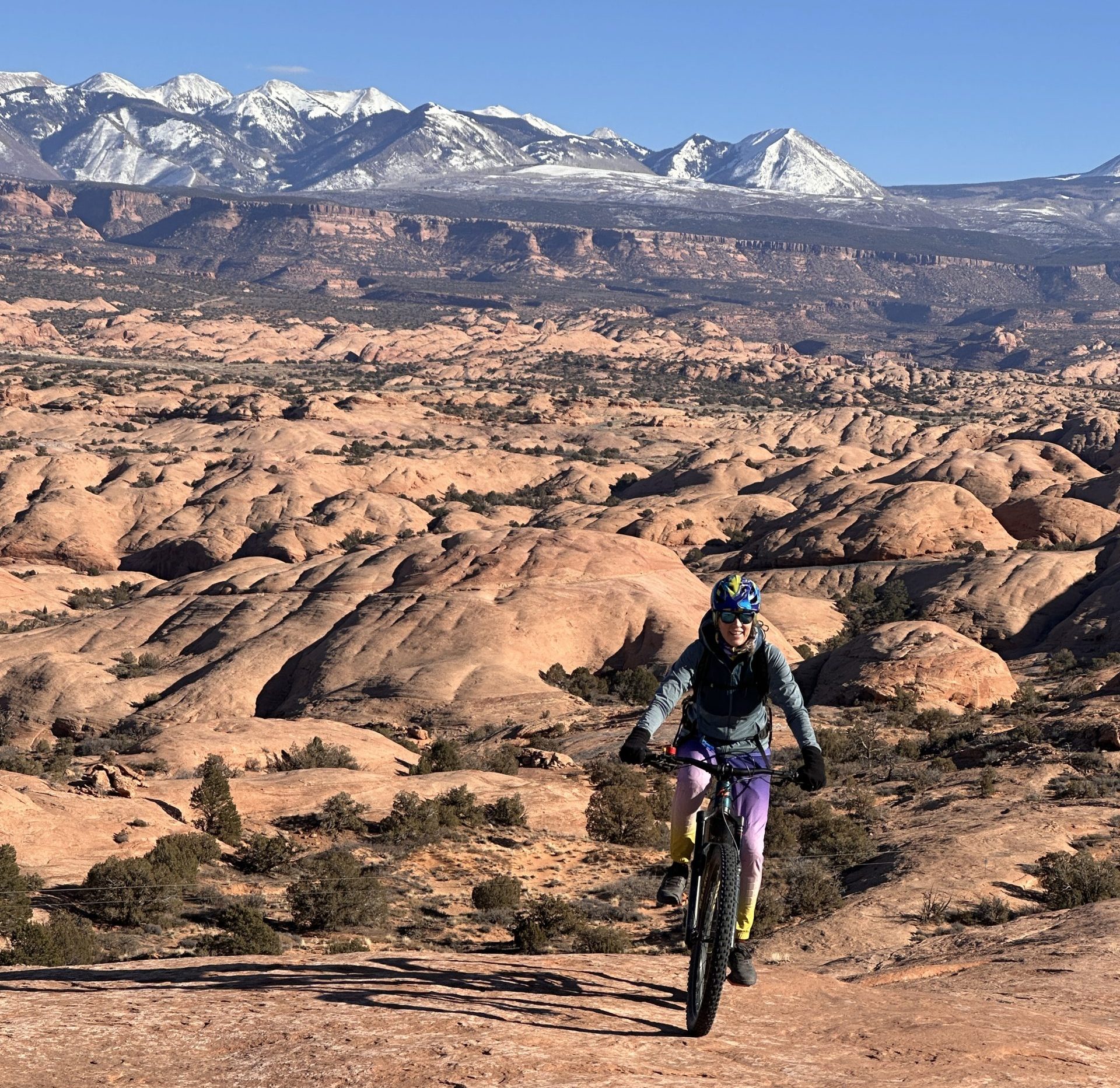
Moab riding is defined by one thing above all else: rocks. Whether you are rolling over the smooth sandstone domes of the Slickrock Trail, navigating the ledgy climbs of Amasa Back, or picking your way through the chunky terrain of the White Rim, the ability to instantly put a foot down can mean the difference between a minor wobble and a painful crash.
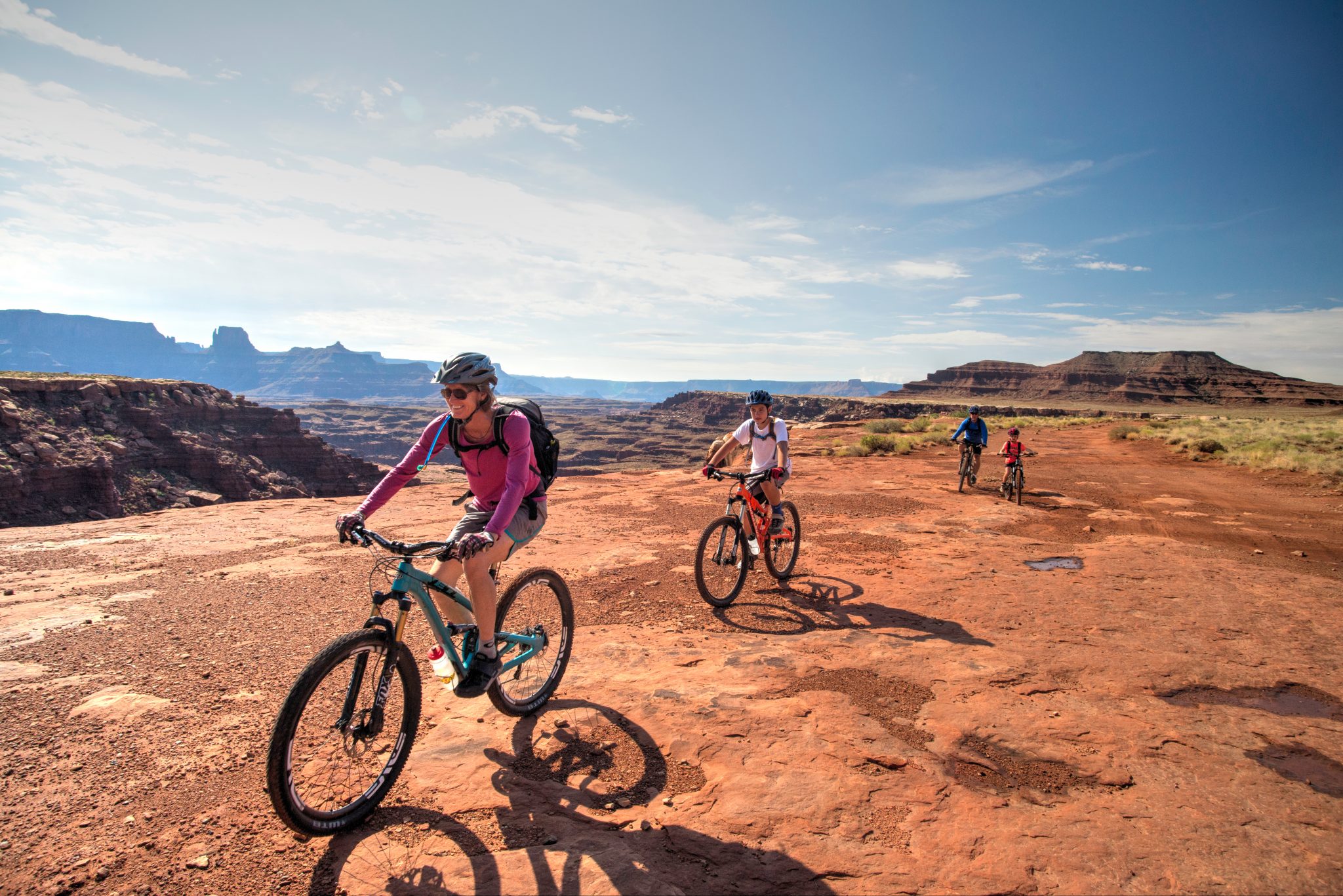
This is especially true for riders who primarily ride road or gravel back home and are encountering Moab’s technical terrain for the first time. Many of our guests on the White Rim Trail are experienced cyclists in their 50s and 60s with strong road-riding backgrounds. They are fit and capable, but they are not accustomed to riding over basketball-sized rocks and up slickrock ledges at walking speed. For these riders, flat pedals are a genuine safety upgrade.
The benefits of flats in Moab are concrete:
- Instant foot-down ability — On steep, rocky climbs where momentum stalls, you can dab a foot without the panic of trying to unclip while tipping sideways
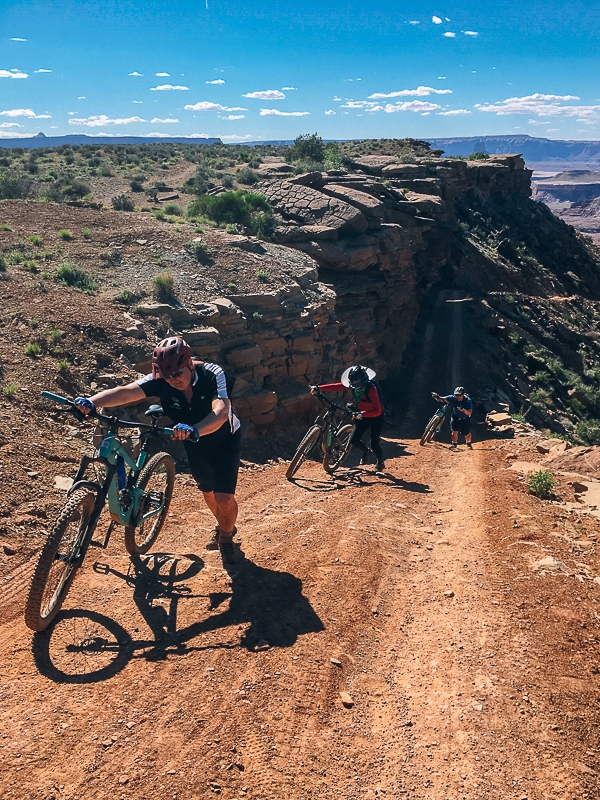
- Comfortable hiking — “If you’re not hiking, you’re not mountain biking” is a Moab truism. Rubber-soled flat pedal shoes are comfortable for the inevitable hike-a-bike sections, while SPD cleats scratch and slip on sandstone
- Confidence on technical terrain — Knowing you can bail at any moment lets you attempt sections you might walk if clipped in
- Less cumulative fatigue — On multi-day tours, minor clip-in spills add up to a “beat-up” feeling that flat pedal riders avoid
When Clipless Pedals Make Sense
Clipless pedals (SPDs, Crankbrothers, Time, etc.) have real advantages that should not be dismissed. Ultra-stiff carbon soles transfer power to the pedals with maximum efficiency, and having your foot locked in the optimal position feels precise and connected. For big XC days where you are pedaling for hours on rolling terrain, clipless pedals reduce fatigue in the legs and feet.
If you are an experienced mountain biker who rides clipped in regularly on technical terrain, you will likely be fine riding Moab in your usual clipless setup. The key question is honesty: are you truly comfortable unclipping instantly in a panic situation on unfamiliar, rocky ground? If the answer is anything less than an emphatic yes, consider trying flats for your Moab trip.
Many of our guides run clipless for big XC race days but switch to flats whenever they are guiding, working on skills, or riding unfamiliar terrain. Being comfortable on both systems is the mark of a well-rounded rider.
How to Get the Most Out of Flat Pedals
If you are switching from clipless to flats (or riding flats for the first time), there is a learning curve. Here are the keys to making flats work well:
Protect Your Shins
Quality flat pedals have aggressive pins that grip your shoe soles, and those same pins will shred your shins if your foot slips off. Wear tall socks at minimum, and consider light shin guards like G-Form pads. Full-length pants are another option. This is not optional advice; it is a near certainty that you will make contact with a pedal pin at some point while learning.
Choose the Right Shoes
Dedicated flat pedal mountain bike shoes (from Five Ten, Ride Concepts, or similar brands) have soft, sticky rubber soles that grip pedal pins like velcro. They make a massive difference compared to regular sneakers or hiking shoes. If you do not have dedicated flat pedal shoes, any trail runner or hiking shoe with a relatively flat sole will work. Avoid shoes with deep lugs, as they do not sit flush on the pedal platform.
Master the Foot Wedge Technique
The “foot wedge” is the single most important flat pedal technique. When descending, point your rear foot’s toes slightly down and your front foot’s toes slightly up, creating a V-shape (or wedge) between your feet and the pedals. This locks your feet onto the pedal platform without clips and dramatically improves front-to-back stability.
Place the widest part of your foot (the ball) on the widest part of the pedal. This gives you the largest contact patch and most secure platform. Practice this on every descent until it becomes automatic.
Drop Your Heels
On steep descents, consciously drop your heels below the pedal axle. This lowers your center of gravity, increases pedal grip, and prevents your feet from sliding forward off the pedals. Combined with the foot wedge, dropped heels give you a rock-solid connection to the bike.
The Best of Both Worlds
Some riders compromise with dual-sided pedals that have a clipless mechanism on one side and a flat platform on the other. These can work, but they tend to be heavier than dedicated pedals and neither side is as good as a purpose-built pedal. Most experienced riders who try both systems end up picking one and committing to it.
The better “best of both worlds” approach is to simply own both types of pedals and swap them based on the ride. Flats for guided tours, skills practice, and unfamiliar terrain. Clipless for race days and long XC rides on trails you know well. Pedals are one of the easiest components to swap on a bike, requiring only a 15mm wrench or hex key.
What Rim Tours Recommends
For riders joining us on a White Rim tour, a day tour on unfamiliar Moab trails, or any ride where they will encounter terrain above their comfort level, we recommend flat pedals. Our rental bikes come equipped with quality flat pedals, and our guides can help you dial in your foot position and technique before the ride begins.
For experienced riders who ride clipped in on technical terrain regularly and are confident in their ability to unclip quickly in sketchy situations, clipless pedals are perfectly fine. Just bring comfortable walking shoes for the side hikes, because you will not want to walk on sandstone in SPD cleats.
Frequently Asked Questions
Should beginners use flat or clipless pedals for mountain biking?
Flat pedals, without question. Learn to ride technical terrain with the freedom to put a foot down instantly. Once your bike handling skills are solid and you rarely need to dab, you can experiment with clipless if you want the performance benefits.
Do Rim Tours rental bikes come with flat pedals?
Yes. All our rental mountain bikes are equipped with quality flat pedals with metal pins. If you prefer clipless, bring your own pedals and the appropriate wrench, and we can swap them before the ride.
Can I ride the Slickrock Trail with flat pedals?
Absolutely. The Slickrock Trail’s sandstone surface provides excellent traction for bike tires, and the steep climbs and descents are easier to manage with the instant foot-down ability of flats. Many riders find Slickrock more enjoyable on flats because they can attempt the steeper sections with less fear of a clipless tip-over.
What flat pedal shoes do Rim Tours guides recommend?
Five Ten (now owned by Adidas) makes the industry-standard sticky rubber sole for flat pedal shoes. Ride Concepts is another excellent option. Both brands offer shoes with excellent grip, toe protection, and enough ankle support for Moab’s rocky terrain. Budget around $100-150 for a quality pair.